

With 2026 Bowman Baseball dropping today, prospecting is on everyone’s mind.
Everyone’s chasing the next Judge. The next Ohtani. The next Trout. If you held those 1st Bowman cards long enough, you’re sitting pretty right now. But that kind of conviction takes years. Sometimes decades. And a whole lot of luck.
Time and time again, we've seen rookie and prospect cards run on hype alone. It's why our general strategy leans toward selling into the call-up window. If the hobby is optimistic about a player, that's often all the fuel prices need to spike.
Last month, we released our official guide to baseball prospecting. It’s one of our most-read posts on Substack. We broke it down into five clear guidelines and mapped out the cleanest entry points to get cards on the cheap.
For our paid subscribers, we've been digging further. Looking for repeatable patterns and tools to solidify our prospecting foundation. Signal in the noise.

We already found one through MLB Pipeline's annual Top 100 Prospects list. Now we're turning our attention to another form of high praise. One that gets handed out before a player is ever drafted.
The Golden Spikes Award
Presented annually by USA Baseball and the MLBPA, the Golden Spikes Award has been recognizing the best amateur baseball player in the United States since 1978. It’s the sport’s version of the Heisman. The top individual honor in college baseball, awarded for both on-field performance and sportsmanship.
Past winners read like a who’s who: Bryce Harper, Kris Bryant, Buster Posey. Three MVPs who all generated enormous hobby heat at one point or another.
Last year’s winner was Arkansas shortstop Wehiwa Aloy. His 1st Bowman cards are finally here with today’s drop, and while it’s a small sample size in the Orioles’ system, early returns are encouraging.
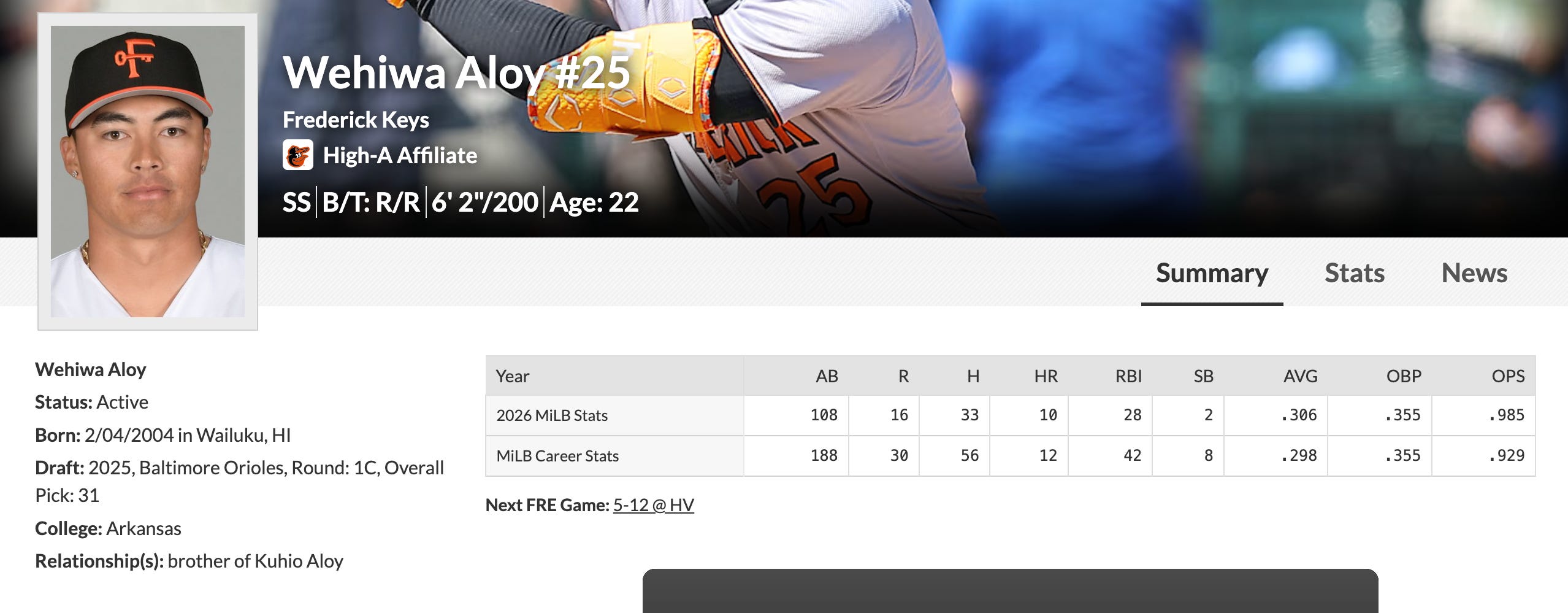
Which got us thinking. Is Aloy’s trajectory what we should expect from a typical Golden Spikes winner? Or is he the exception?
We went back through every winner since 2000. What kind of careers did they have? How have their cards performed? And what does any of it mean for how we approach players like him?
Let’s rip in.
