

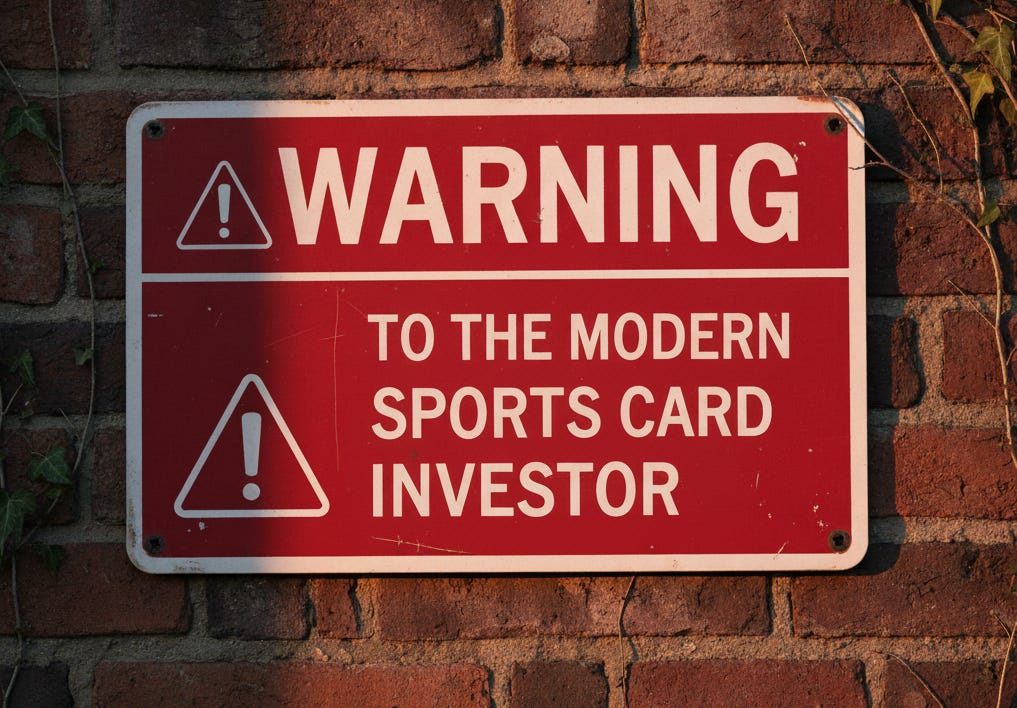
The word investing gets thrown around in the hobby a lot these days. But before you convince yourself that ripping wax or buying into breaks is the cardboard equivalent of Wall Street, here’s the truth — the odds aren’t built in your favor. After five years back in the hobby, we’ve seen firsthand how tough it is to actually come out ahead.
Collectors today usually fall into two groups. On one side, the Sports Card Collector — set builders, quirky PCs, and anyone who buys cards because they genuinely want them. On the other, the Sports Card Investor — folks who treat cards like an alternative asset, where profit comes first and collecting is secondary.
At The Hobby Wire, we like to say we sit somewhere in the middle. We love our PCs, but we won’t pass on a flip if it helps us land something we actually want down the road. And here’s the thing we’ve realized since the pandemic reignited our hobby fire: modern card investing isn’t impossible, but you should know exactly what you’re up against.
Everyone Wants Their Cut
The modern hobby is crowded with players, and almost all of them have one thing in common: they’re trying to make money before you do. Manufacturers pump out products designed to sell out instantly. Breakers dangle “monster hits” in streams that look more like game shows than shops. Even grading companies profit from the chase, turning condition into currency. None of this is necessarily bad — but it means that by the time you enter the equation, the pie is already sliced. These businesses will always prioritize their own margins over yours. That’s never going to change.
You’re Not Buying Into the Business
Buying a box of cards isn’t like buying stock in Panini or Fanatics. Their role ends the second the product sells out. Whether your box doubles in value or tanks doesn’t affect them one bit. Unlike shareholders, you’re not in on their profits — you’re just in on the risk.
Athletes Are an Unstable Foundation
Card values rise and fall on the backs of athletes, and athletes are unpredictable by nature. For every Ohtani or LeBron, there are dozens of “can’t-miss” stars who never quite meet the big expectations the hobby has for them. When you buy into modern cards, you’re effectively betting on human performance — and that’s one of the riskiest bets you can make.
Investing or Gambling?
The hobby leans hard on products that blur the line between investing and entertainment. Group breaks, mystery boxes, repacks — they all offer the promise of a small buy-in with potential for a big payoff. That thrill is part of the fun, but let’s call it what it is: speculation that behaves more like gambling than long-term investing.
The Vintage Advantage
Vintage is different. Nobody’s printing more 1952 Bowmans. A Mickey Mantle rookie will always be scarce, and scarcity is the backbone of real investing. Unlike modern wax, which behaves more like a lottery ticket, vintage cards behave more like appreciating assets. They’re the closest thing the hobby has to a true investment: limited supply, established demand, and a proven track record of growth over time.
Know What You’re Up Against
If you really want to “invest” in modern cards, the most reliable way isn’t ripping wax, buying into box breaks or chasing mystery boxes. It’s making a call on a specific athlete, buying their cards at a price point you’re comfortable with, and being prepared to sell if your prediction pans out (or take the loss if it doesn’t). Any product promising faster, easier gains is closer to gambling than investing.
That’s not to say there’s no fun in the chase — plenty of collectors enjoy it for exactly what it is. But if you’re entering the hobby with dollar signs in your eyes, remember this: the odds are rarely in your favor. Knowing that going in is the best edge you can give yourself.
And if you want help cutting through the noise — the good, the bad, and the entertainingly absurd — that’s why The Hobby Wire is here. Subscribe and stay ahead of the curve.
Disclaimer: The content in The Hobby Wire is for informational and entertainment purposes only. Commentary, analysis, and opinions on sports cards, rookies, and the hobby are not financial, investment, or professional advice. Collectors should always do their own research before buying, selling, or trading cards. Market values are volatile and can change rapidly—past performance is not a guarantee of future results.
Unless specified, all pricing references are based on the Prizm/Refractor parallels of an athlete’s Chrome rookie card, with prices from alt.xyz & 130pt.com.
Any odds mentioned were derived from DraftKings Sportsbook.
The best thing you can do if you are purchasing any modern card within a sets realse is to wait.
Everyone speculates on who's the next big thing and with so little supply out the prices are at the all time high. Wait a few months or until a new set comes out for the best value on singles.