

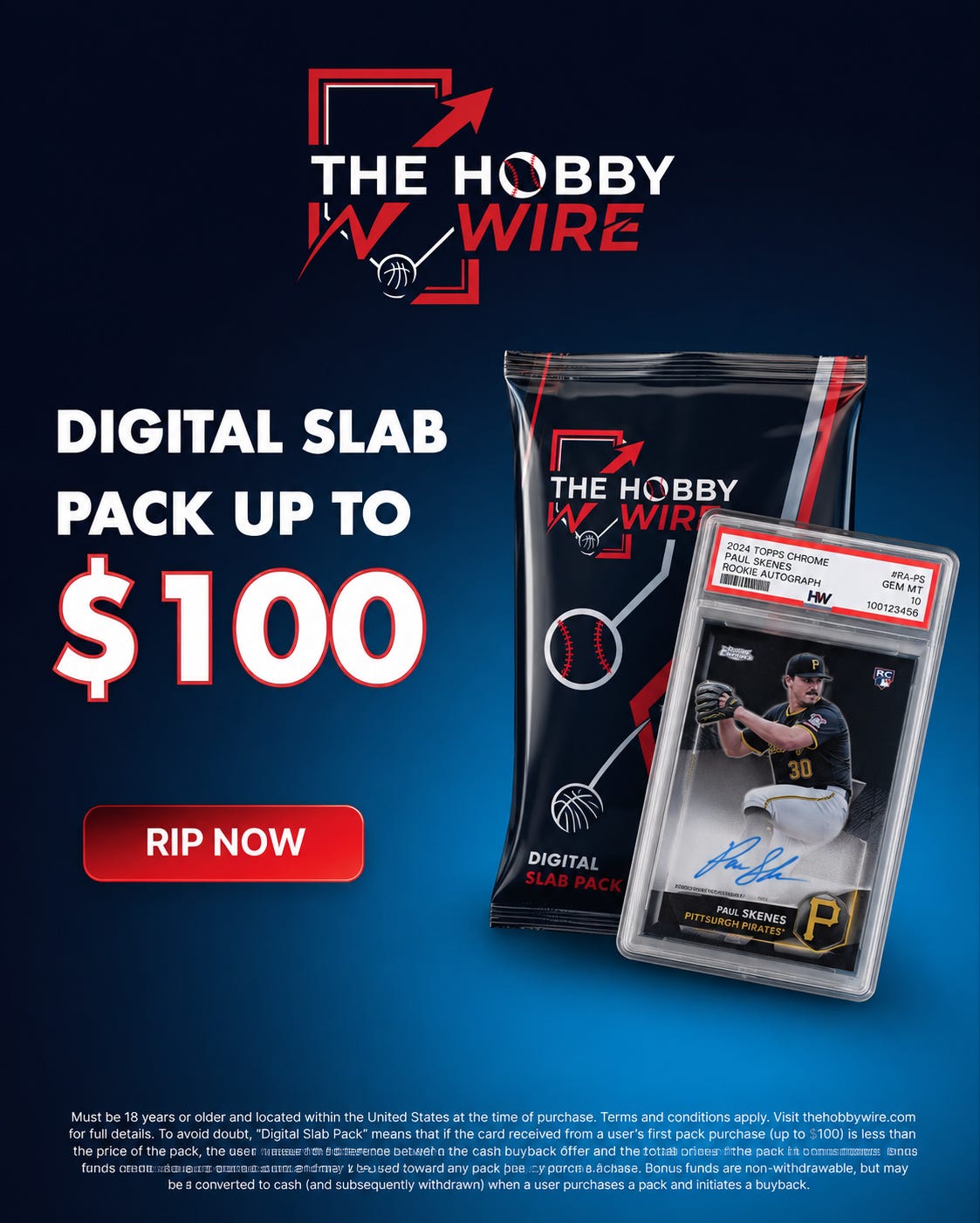
Has anyone else's Facebook and Instagram feeds been inundated with ads like this all summer?
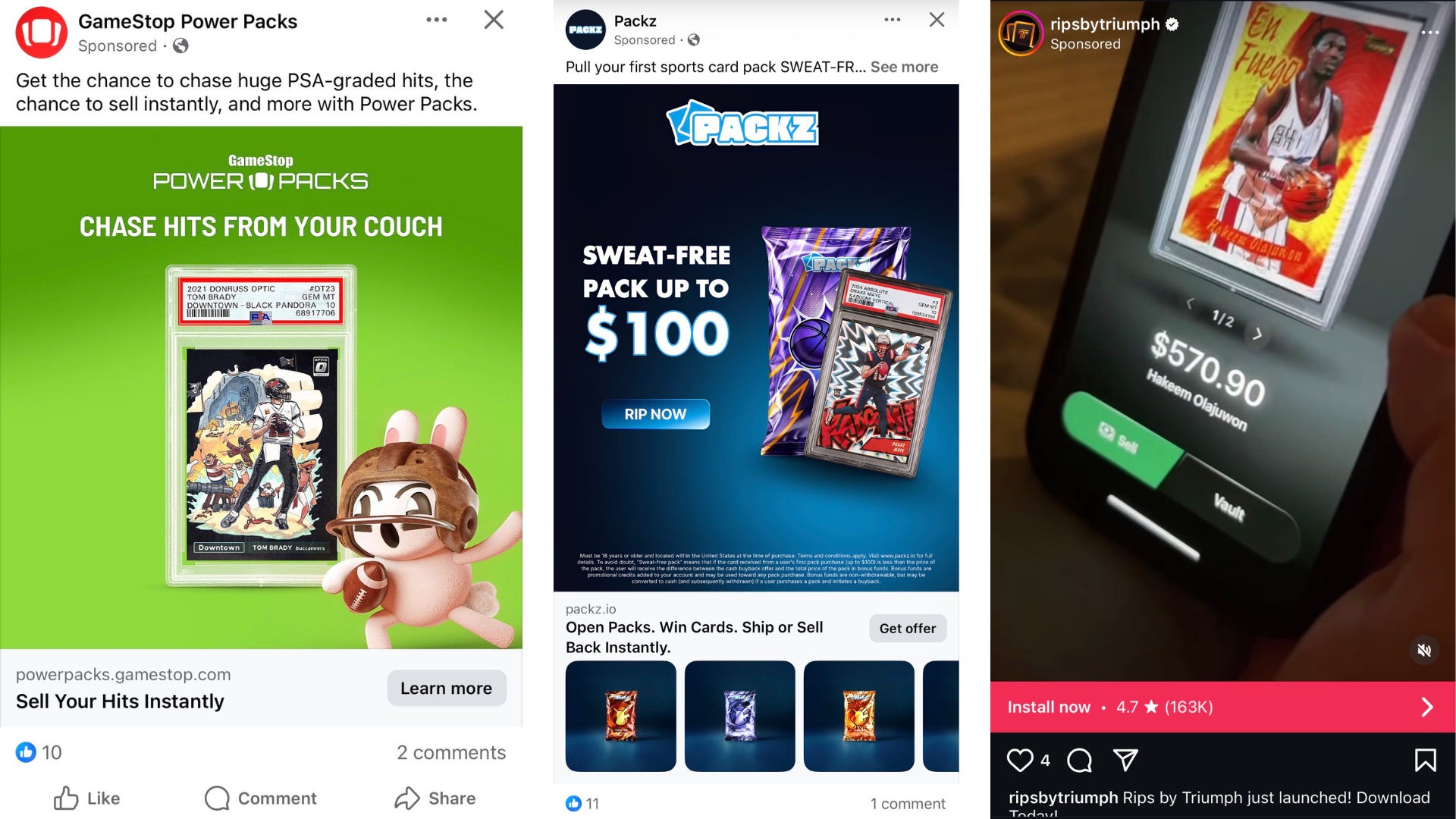
For the last three weeks, it feels like every other ad in our feed is for Packz or Rips by Triumph.
2026 is bringing in a wave of new companies offering what’s known as “Digital Pack Openings.”
The concept isn't new. For years, collectors have been able to purchase graded card repacks from their LCS or from vendors at a card show, all for the chance to hit the chase card that's been inserted into the supply. Breakers have been offering this for a while now too.
What’s new is how streamlined it’s become.
The whole thing has boiled down to an app on your phone, no trip to the hobby shop, no live stream, no sitting through forty other spots waiting for yours to come up, just flashy visuals revealing a card you've most likely overpaid for.
Now the big players are moving in. Fanatics launched Instant Rips on Fanatics Live last spring, and GameStop joined the party more recently with their Power Packs.
So we spent $150 to find out how these things actually work. It’s always good to know the rules before you play the game.
Let’s rip in.
The Sales Pitch
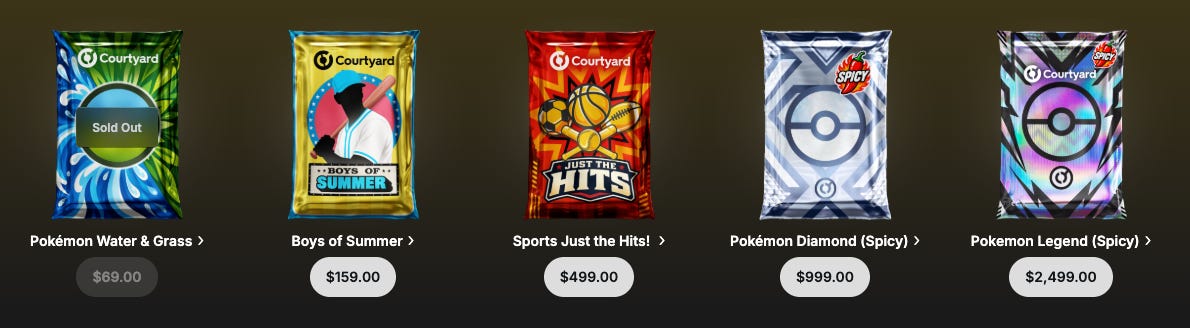
Whatever app you're using, the premise is the same. You scroll through a vast list of digital packs with prices ranging from the price of lunch into the thousands.
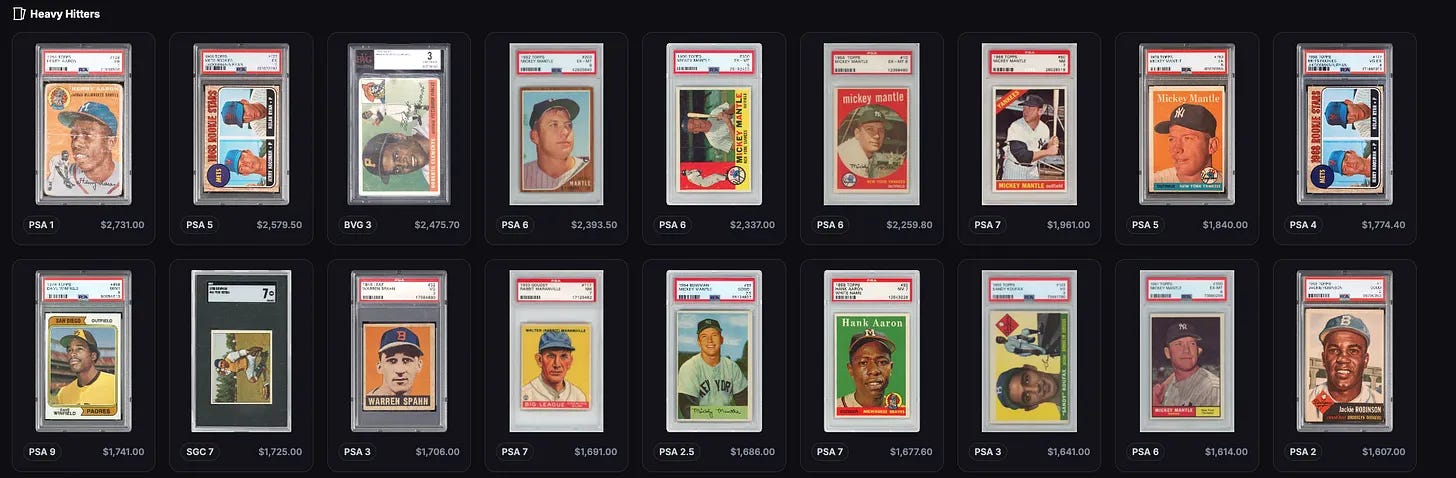
Click on a pack and you’ll typically see all the chase cards laid out in a menu. Like what you see? Buy the pack and take your shot. You get a short rip animation, then the big reveal.
What the menu doesn’t always show you, at least easily, are the odds.
On Courtyard, we had to click a dropdown menu nowhere near the card menu to find the odds and the average cost of the cards in the pool. On some of these apps, your shot at the chase cards is less than 1%.

Don’t like what you pulled? No problem. You can sell the card back to the company for 80-90% of the comp. Everything else sits in a vault, and from there you can list your cards on the app’s marketplace or have it shipped directly to your door.
Some of these companies also advertise that, over time, the long-term average value of your pulls will converge on the price of the pack. Meaning the more packs you buy, the more likely you are to break even.
We’ll come back to that.
Right now, though, this sounds like a pretty good deal, right? You put in $100 for a guaranteed physical card that could be worth more than what you paid. And if it isn’t, or you just don’t like it, they’ll buy it back so you don’t eat the whole loss.
That’s the pitch. So we tried it.
Our Two Packs
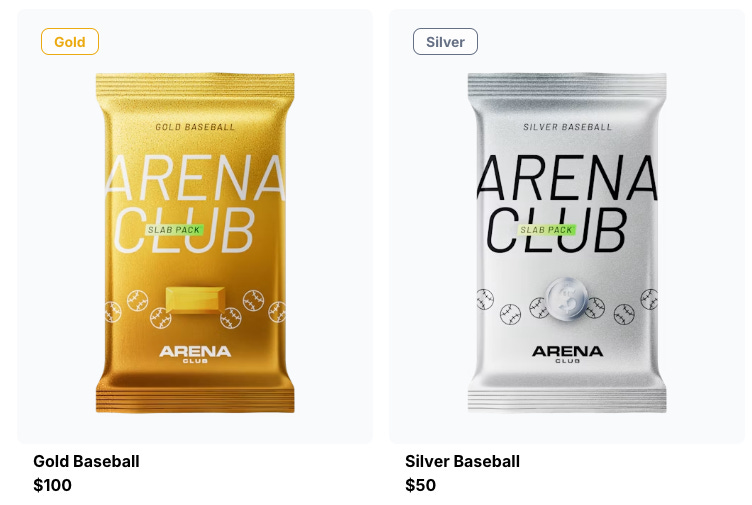
We bought one $100 baseball pack from Arena Club. The chase was a Shohei Ohtani Bowman Anime card.
What we got was a Gleyber Torres rookie. Valued at $40.
Womp womp.
Arena Club offered us $36 to take it back, which is a hair over 90% of the comp and exactly what they advertise. We took it, and put the $36 toward a $50 pack for a shot at a Paul Skenes Anime card.
We got a PSA 8 Gold Label Rickey Henderson. A $30 card.
All in, we spent $114 to get a $30 card.
The odds were posted and the buyback paid out exactly as promised. Nobody swindled us here. We just lost.
The Business Model
As collectors, we tend to forget that trading cards are first and foremost a business. Companies wouldn’t be making these if there wasn’t money in it. So when something new comes onto the scene, know that the ultimate goal is profit. Not for you, but for the business.
So how do digital pack openings make money? Let’s make it simple.
Say The Hobby Wire is getting into the digital pack business. (We’re not. Nor would we ever.)
We want to sell 1,000 digital multi-sport packs at $50 a pack, with one chase card worth $25,000 in the mix. That’s $50,000 coming in. To make the average value of the cards match the price of a pack, we need 999 other cards averaging $25 each. Which would mean 99.9% of buyers pull a card worth half of what they paid. And every one of them would be incentivized to sell it back to us at 80% of the comp, or $20.
That’s where the money starts coming in for us.
It’s the second round of slab packs where it starts looking good. We sell another 1,000 packs at $50 and another $50,000 comes in. Our costs this time? Roughly $20,000 to buy back the 999 cards from the first wave of packs, plus $25,000 to replace the chase card that shipped out. Call it $5,000 in profit. Then we rinse and repeat.
This assumes everyone who pulled a $25 card sells it back. Realistically, some will hold, and every card we don’t get back is one we have to go buy on the open market. That eats into the margin, but we already made our money back the moment the packs sold out, so the downside is capped. If the customer does want the card shipped to them, we’ll charge a fee to pull it from the vault and put the shipping costs on them, which helps offset what we lost by not getting the card back.
The big money is in buying these cards back at a discount and reloading them into the next batch. So our real goal as a business is to convince you not to take your card home.
Easy enough. You just stock the pool with cards no one is in a hurry to own. A Ben Simmons Silver Prizm. A Ken Waldichuk auto. Our 2018 Gleyber Torres, for that matter. It’s not at random. That’s the product working as designed.
So Are They Worth It?
A single $25,000 chase card sitting on top of 999 pieces of filler is an extreme setup. We built it that way because the math is easier to follow when there’s only one thing worth chasing.
Real digital packs tend to be more nuanced. Most pools carry several cards priced above the pack, not just one. Plenty of them are tiered, with a grail at the top and a spread of respectable hits underneath, and that larger spread of mid-tier hits makes it feel like you have a better shot at a win, which is exactly what keeps people buying.
But that only changes how a pack feels. It doesn’t change the house edge.
One card above the buy-in or fifty, the pool still has to average out to something the operator can work with. Which means the overwhelming majority of what’s in there is worth less than what you paid.
Which brings us back to that convergence promise. Buy enough packs and your average pull will approach what you paid. That’s a true statement that turns out to be useless in practice. Nobody is buying anywhere near the number of packs convergence requires. Maybe you buy a few. Maybe five. Maybe ten if you really like the quick hits of dopamine. We bought two. In our fake company, you would need to buy 1,000.
And these days, the convergence promise is showing up less and less. There’s too much money left on the table when you cap the value of your pool at the price of your product. Selling our packs for just $5 more would net us another $5,000 in pure profit.
So let’s just call this what it is.
Digital pack openings are the slot machines of the hobby. Your money goes in, sometimes you win, and more often you don’t.
Outside buying graded singles, almost every corner of this hobby involves some kind of gamble. That’s fine, as long as we as collectors know that what we’re really paying for is entertainment. We rip wax for the fun of it, not the profit.
If you want the rush of the reveal without driving to the LCS or sitting through a two-hour break, digital pack openings deliver exactly that. Quick, clean, and the buyback means the floor is never zero. Just budget for it like you would a night out. When the money is spent, it’s gone. The second you start telling yourself that a randomized pack opening is an investment, the math stops being on your side.
With Fanatics and GameStop now in the picture, these things aren’t going anywhere. Neither are the ads. Somewhere, an algorithm has us pegged as an easy mark.
It’s not wrong. We’ve got a $30 Rickey Henderson to prove it.
Have you opened any digital slab packs? Let us know what your experience was down in the comments?
Disclaimer: The content in The Hobby Wire is for informational and entertainment purposes only. Commentary, analysis, and opinions on sports cards, rookies, and the hobby are not financial, investment, or professional advice. Collectors should always do their own research before buying, selling, or trading cards. Market values are volatile and can change rapidly—past performance is not a guarantee of future results.
Unless specified, all pricing references are based on the Prizm/Refractor parallels of an athlete’s Chrome rookie card, with prices from market movers, alt.xyz & 130pt.com.
Any odds mentioned were derived from DraftKings Sportsbook.