

Most collectors/investors try to predict Hall of Fame careers.
They buy the rookie. They dream on the upside. They convince themselves they’re early to the party.
But what if the real money isn’t in predicting greatness? Can we wait until greatness is already guaranteed?
Instead of gambling on who might get the call, we want to know:
Is there a quiet, overlooked window after a sure-fire Hall of Famer retires… but before they’re officially inducted… where prices dip just enough to create a buying opportunity?
To test this, we looked at PSA 10s of the most popular rookie cards from recent first-ballot Hall of Famers across MLB, NFL, and NBA to see if a pattern emerges.
If this window exists, it might be the safest play in the hobby.
Let’s rip in.
Baseball
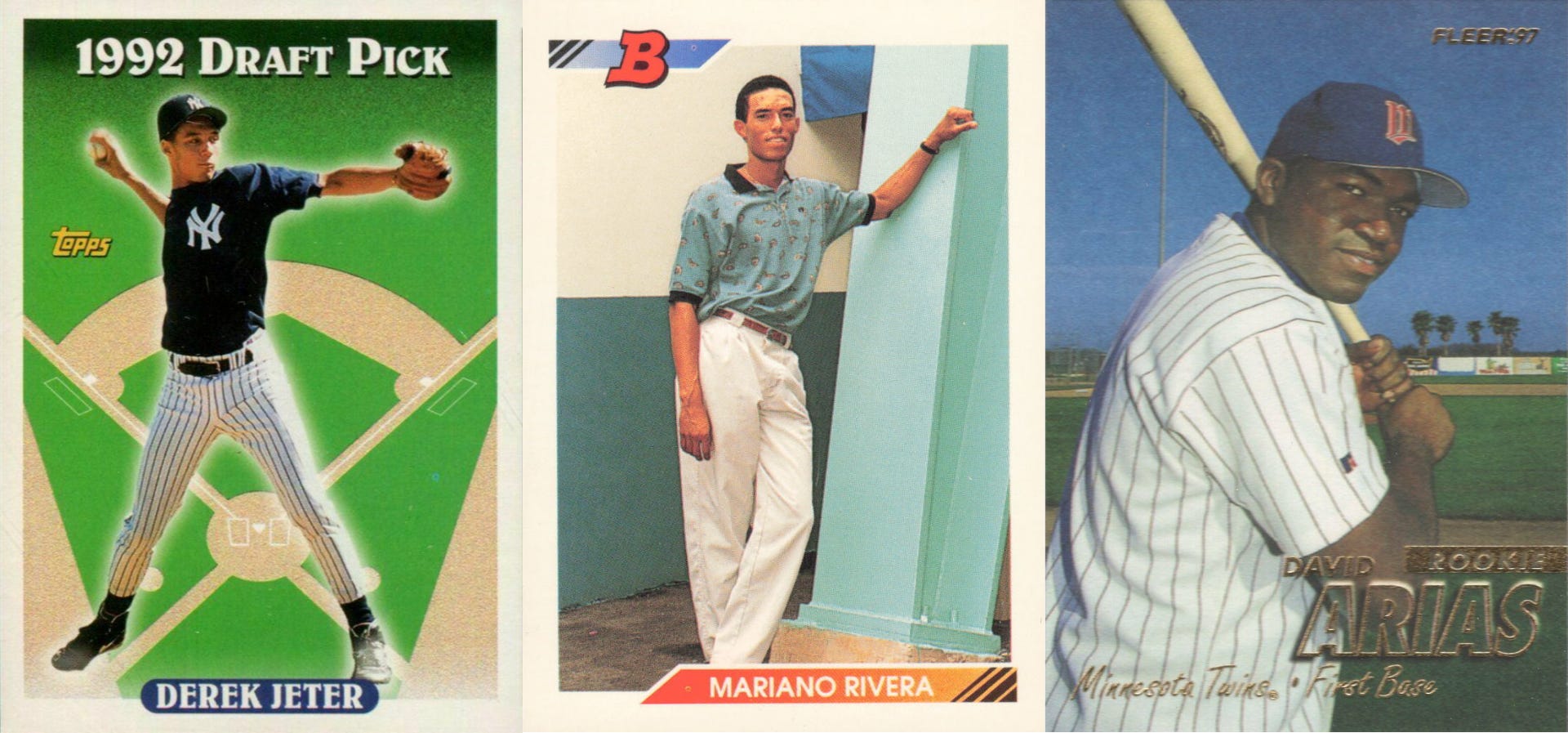
Selected Players & Cards
Derek Jeter — Class of 2020 — 1993 Topps Flagship #98
Mariano Rivera — Class of 2019 — 1992 Bowman #302
David Ortiz — Class of 2022 — 1997 Fleer #512
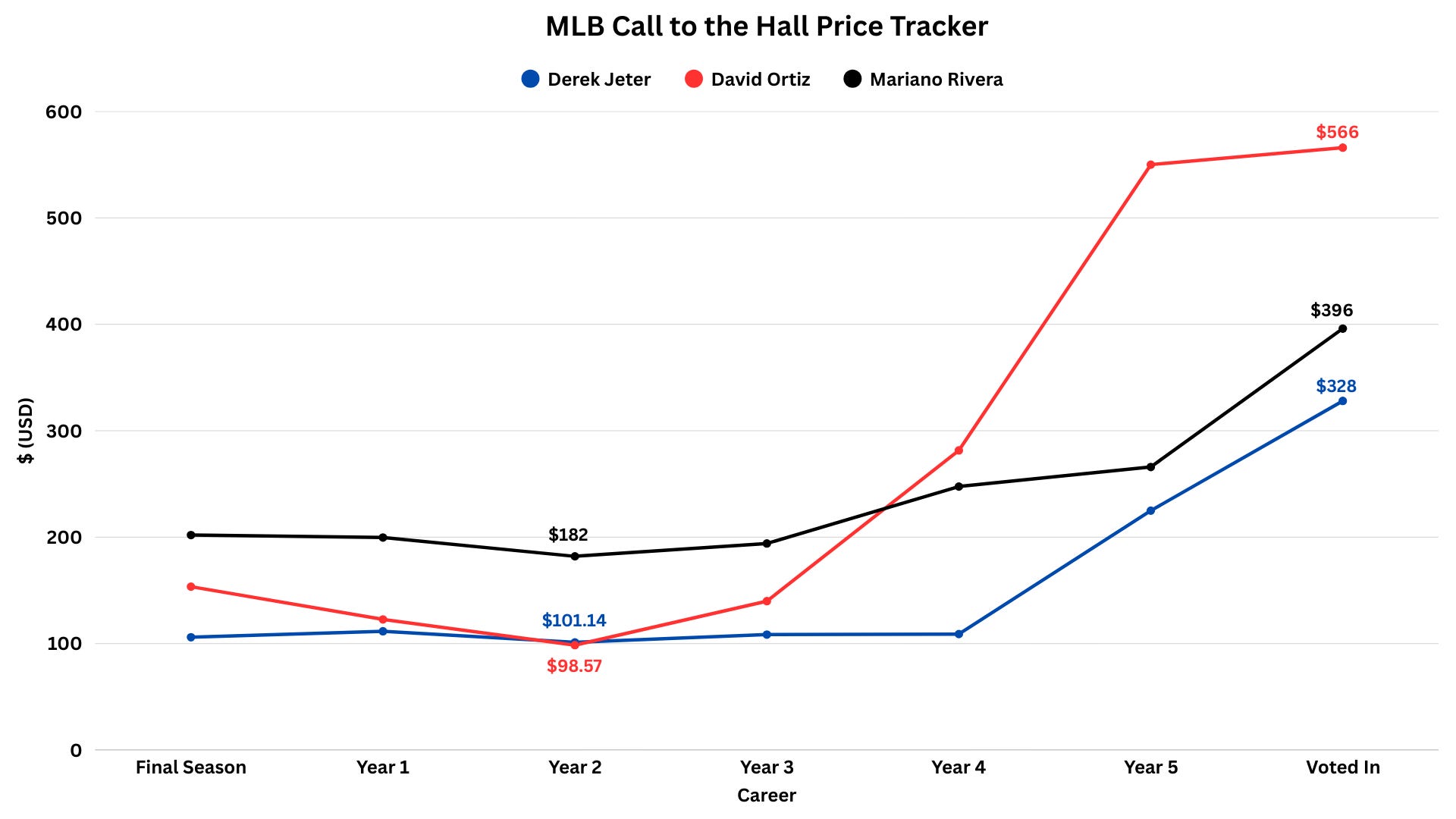
Major League Baseball requires players to be retired for five full seasons before appearing on the ballot. That built-in waiting period is important.
Looking at these three together, two things stand out immediately:
There’s a clear price spike when a player is officially voted in.
All three hit their lowest prices in Year 2 of retirement.
That second point is the key.
Not Year 1 when retirement tributes are fresh.
Not Year 5 when Hall eligibility chatter starts to ramp up.
Year 2.
David Ortiz’s numbers were inflated by the pandemic boom, but even after the market corrected in late 2022, his PSA 10 settled around $223 — still well above his Year 2 lows.
For baseball, the play is surprisingly simple.
Buy in Year 2 of retirement. Sell when they’re officially voted in.
Using this strategy on our three samples, you’re looking at average gains of 156%, even when using Ortiz’s post-correction pricing. A 2.5x return for roughly a three-year hold isn’t bad at all.
Football
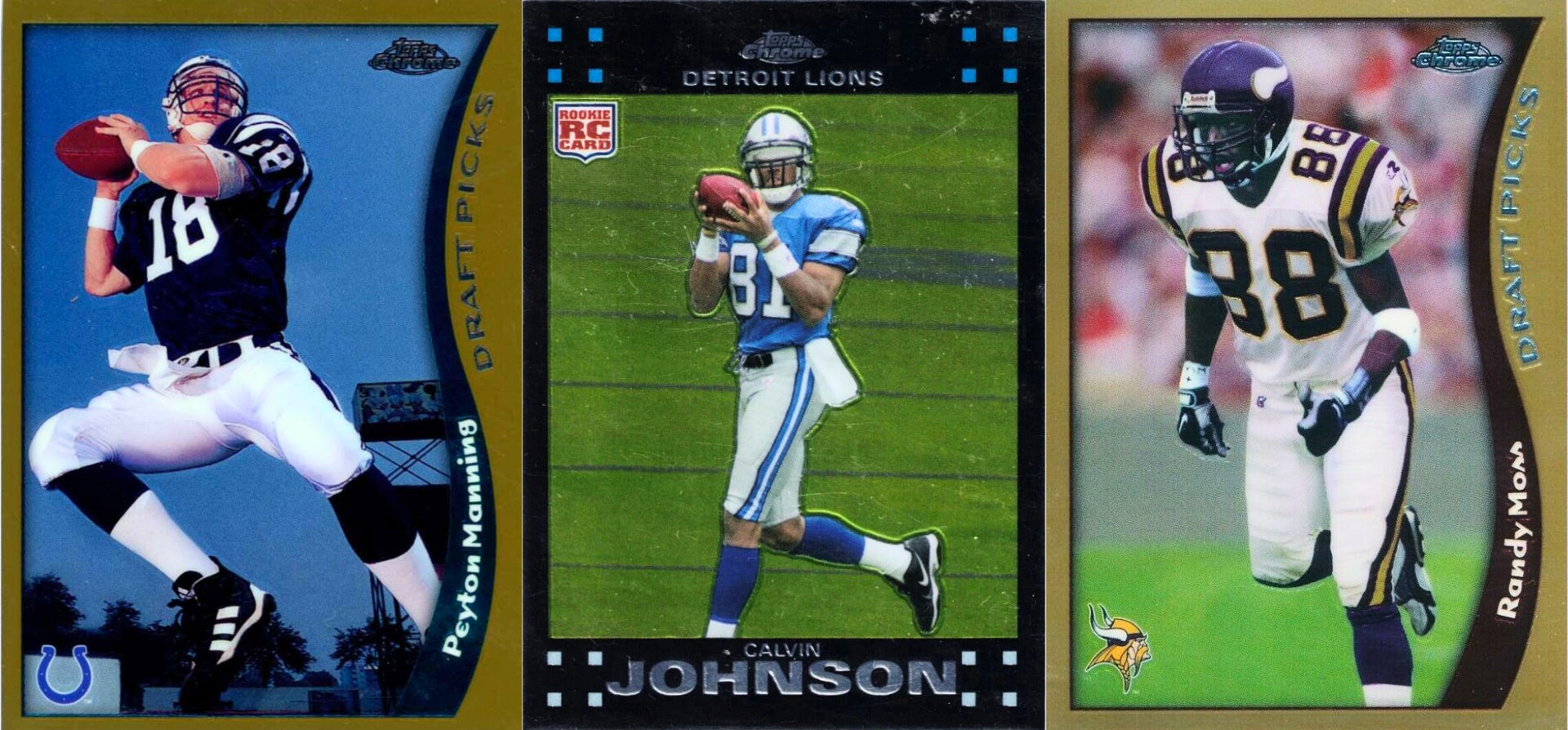
Selected Players & Cards
Peyton Manning — Class of 2021 — 1998 Topps Chrome #165
Calvin Johnson — Class of 2021 — 2007 Topps Chrome #TC200
Randy Moss — Class of 2018 — 1998 Topps Chrome #35
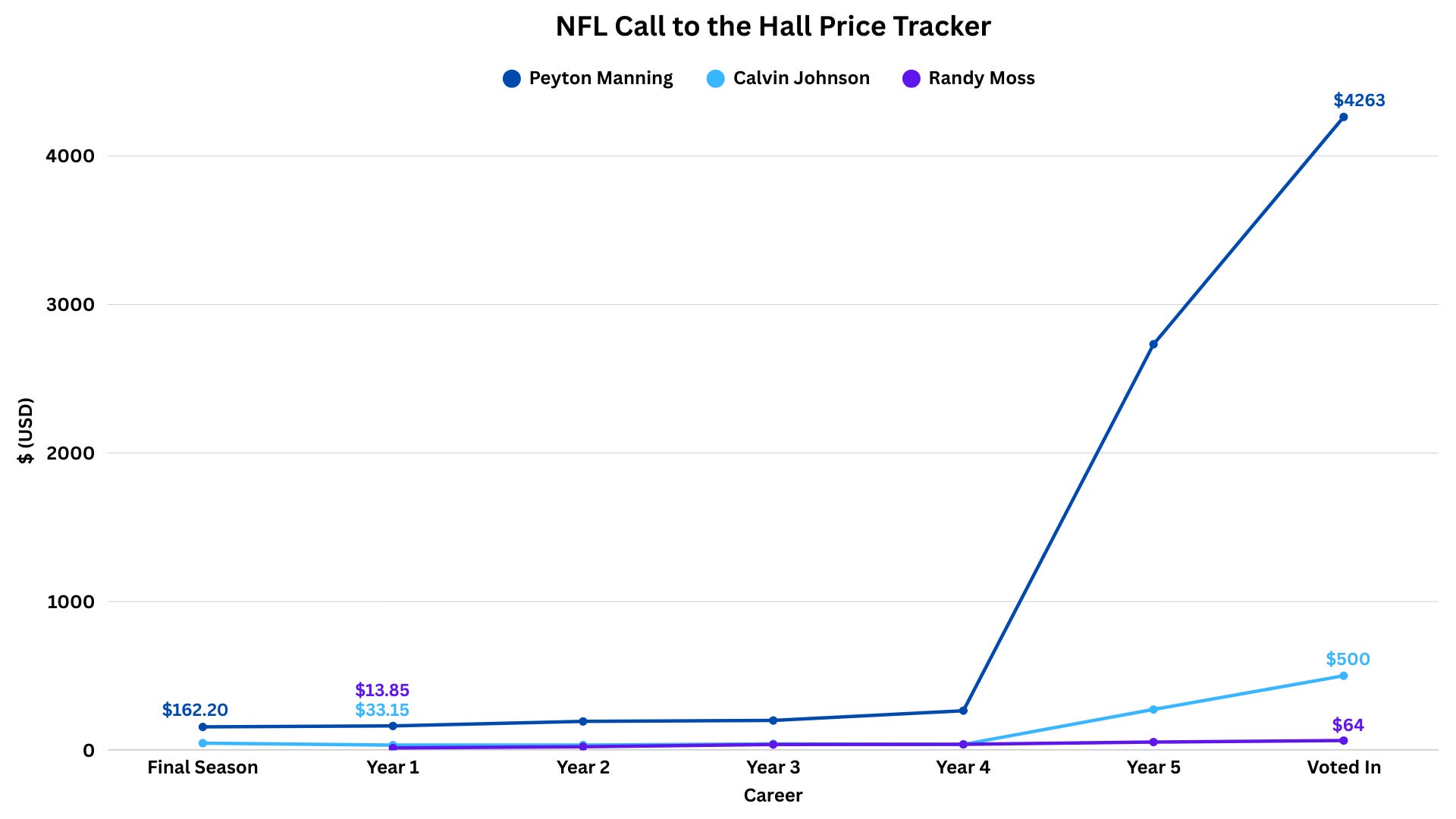
Football tells a slightly different story.
Unlike baseball, there isn’t a crystal-clear “Year 2 dip” across the board. But what we do see consistently is this:
Induction prices are higher than retirement-era prices.
The window just appears earlier.
In each of our samples, the best buying opportunity came shortly after retirement was announced once the immediate emotion faded and attention moved back to the league.
Yes, Peyton and Calvin Johnson were enshrined in 2021 — the peak of the COVID card boom. If you use absolute highs, the returns are absurd. 1,400%+ average gains.
But let’s be realistic.
Using post-correction prices ($625 for Manning and $157 for Megatron), the strategy still produces nearly 3x returns.
For football, the play looks like this:
Buy a few months after retirement is announced. Sell at induction.
Basketball
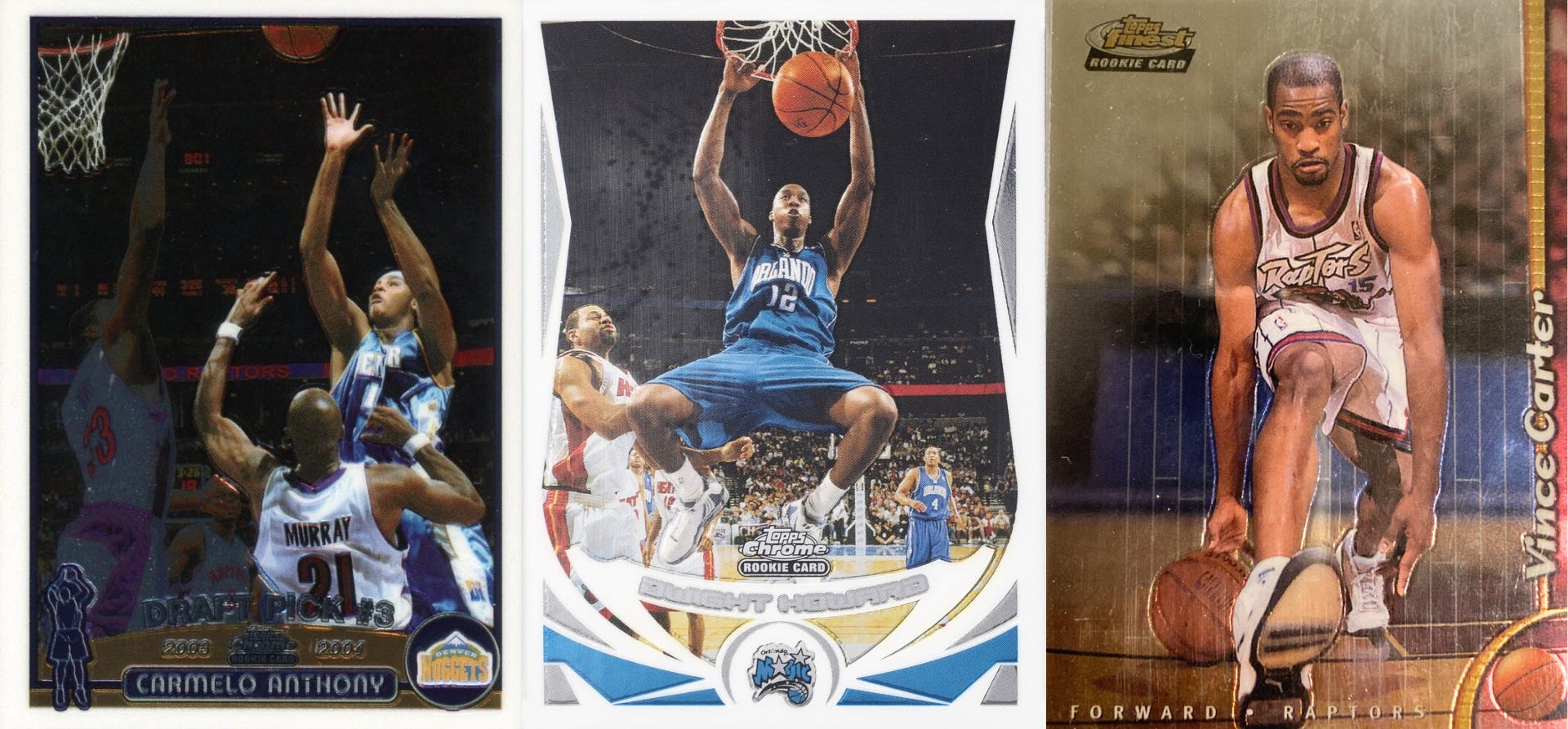
Selected Players & Cards
Carmelo Anthony — Class of 2025 — 2003 Topps Chrome #113
Dwight Howard — Class of 2025 — 2004 Topps Chrome #166
Vince Carter — Class of 2024 — 1998 Topps Finest #230 (No Coating)
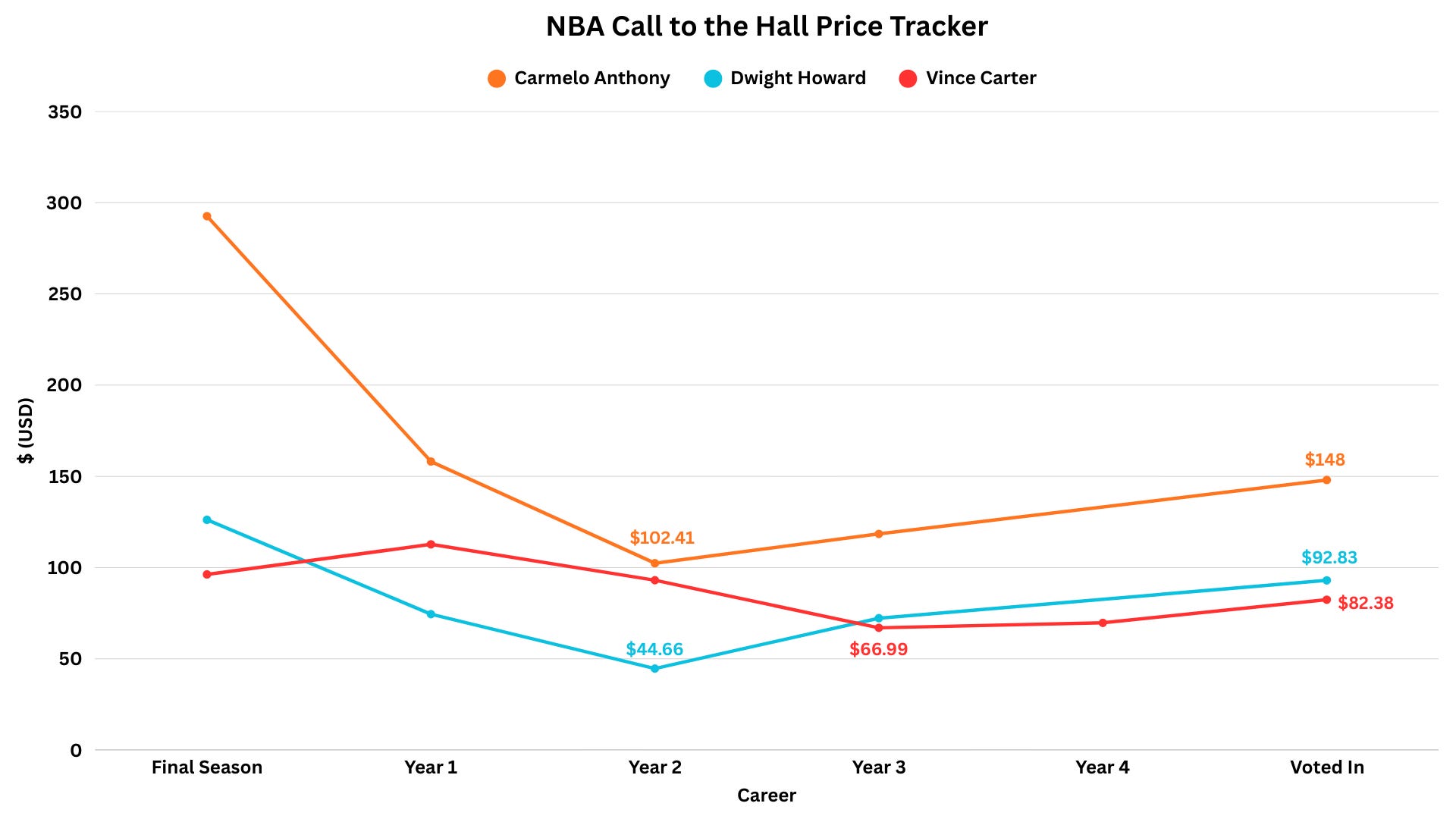
Basketball shows a retirement dip as well.
Melo and Dwight both saw price pullbacks in Year 2. Vince Carter dipped in Year 3. Why the difference?
Once again, it’s COVID timing.
Years 1 and 2 of Carter’s retirement overlapped with the hobby boom, delaying his true cooling-off period. We see a bigger issue though.
The Basketball Hall of Fame shortened its eligibility window from four years to just two in recent rule changes.
Our strategy depends on a meaningful cooling-off period. If induction happens quickly, there’s less time for prices to drift — and less inefficiency to exploit.
Because of that, basketball may not offer the same clean window that MLB and NFL do.
So What’s the Strat?
Based on the data, this isn’t just a theory. There’s a real pattern here.
The Criteria
The player must be a sure-fire, first-ballot Hall of Famer. No debates. Think Mike Trout, Patrick Mahomes, Aaron Rodgers, Justin Verlander.
Focus on MLB and NFL, where eligibility rules create longer gaps.
The Play
Baseball:
Buy in Year 2 of retirement. Sell at official induction.
Football:
Buy a few months after retirement is announced. Sell at induction.
Final Thoughts
Hall of Fame investing isn’t about predicting greatness. It’s about recognizing it after the legacy is already written and timing the boredom in between.
The data suggests there’s often a quiet stretch after retirement where attention fades and prices cool. Then the call comes. The speeches happen. The highlight reels resurface. And so do the comps.
If you’re going to bet on cardboard legacies, you might as well do it when the legacy is already written.
Just remember — we’re still talking about pictures of athletes on shiny paper. Even the safest plays in this hobby come with risk.
Disclaimer: The content in The Hobby Wire is for informational and entertainment purposes only. Commentary, analysis, and opinions on sports cards, rookies, and the hobby are not financial, investment, or professional advice. Collectors should always do their own research before buying, selling, or trading cards. Market values are volatile and can change rapidly—past performance is not a guarantee of future results.
Unless specified, all pricing references are based on the Prizm/Refractor parallels of an athlete's Chrome rookie card, with prices from Market Movers, alt.xyz & 130pt.com.
Any odds mentioned were derived from DraftKings Sportsbook.