

Grading isn’t mandatory in the hobby. Some collectors love the extra protection and market validation that comes with a slab, while others prefer raw cards or think the process adds unnecessary costs. But whether you grade or not, it’s impossible to ignore the fact that graded cards make up a huge share of the modern buying and selling landscape.
With that in mind, let’s break down the three major grading companies in today’s hobby—PSA, Beckett (BGS), and SGC—and explore whether their grades hold equal weight when it comes to value.

PSA (Professional Sports Authenticator)
Founded: 1991
Reputation: The most recognizable slab in the hobby.
What They’re Known For: Registry set culture, a design that’s become the standard look for graded cards, and being perceived as particularly strict on centering.
Where They Stand Today: PSA slabs are among the most traded in the market, and they’ve built strong collector loyalty over decades. Collectors often default to PSA for high-profile rookies and key vintage pieces.

Beckett (BGS)
Founded: 1999
Reputation: Once considered PSA’s biggest rival, especially during the 2000s and 2010s.
What They’re Known For: Subgrades (centering, corners, edges, surface) and the elusive “Black Label” 10.
Why It Matters: A Black Label BGS 10 is the toughest, most prestigious grade in the hobby—and when a card earns one, its value can skyrocket well beyond PSA or SGC equivalents.
Where They Stand Today: Market influence has cooled compared to their peak. Turnaround times and inconsistency have drawn criticism. A BGS 9.5 (Gem Mint) rarely holds up against a PSA 10 in value, even if the card looks equally sharp.

SGC
Founded: 1998
Reputation: The “tuxedo slab” became iconic in vintage circles, where SGC has long been considered the most trusted grader.
What They’re Known For: Competitive prices, lightning-fast turnaround times, and strong credibility among pre-1980 collectors. In recent years, they’ve gained traction with modern rookies thanks to those quick, affordable services.
Where They Stand Today: Still trailing PSA in resale value for modern, but they’ve carved out a loyal following. And there’s one wrinkle worth watching: SGC was recently acquired by Collectors, the parent company of PSA. How this partnership plays out could reshape their role in the hobby.
Do Equal Grades Hold Equal Value?
On paper, a Gem Mint is a Gem Mint. But in practice? Let’s take a closer look with two real-world examples—one modern and one vintage—to see how values stack up across the big three grading companies.
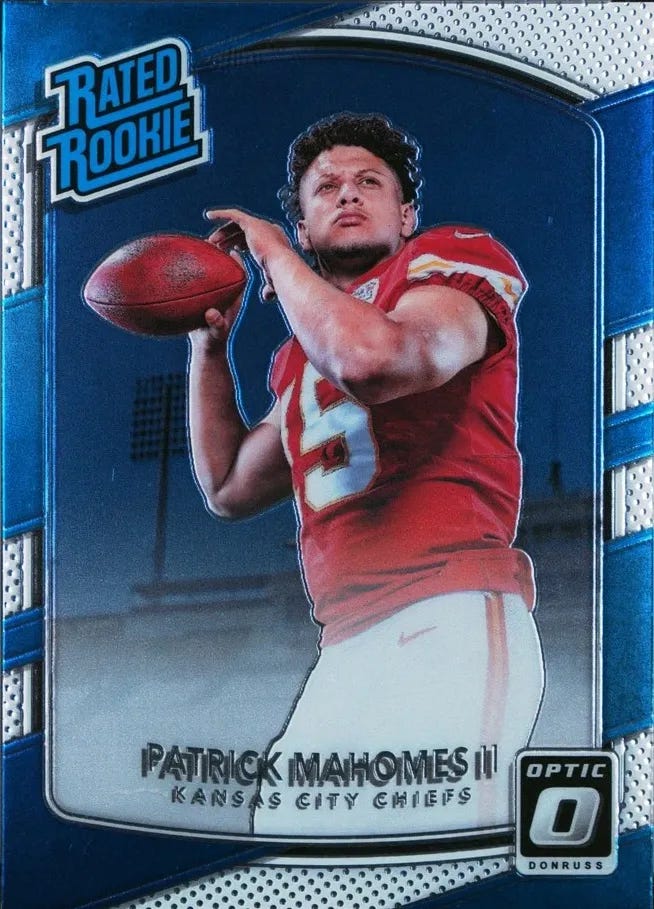
Modern Example: 2017 Donruss Optic #177 Patrick Mahomes Base Rookie
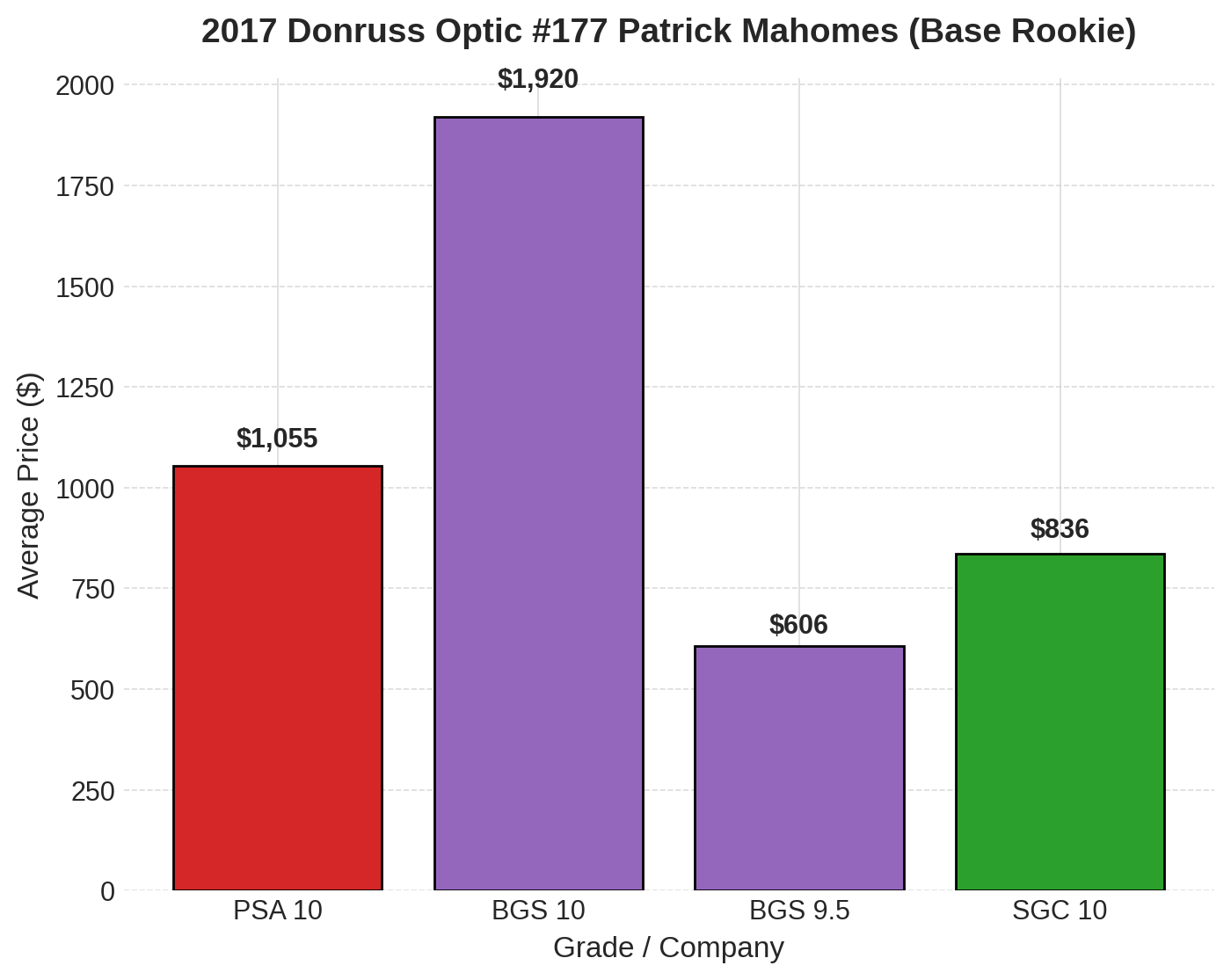
PSA 10: $1,055 average
BGS 10 (Pristine): $1,920 average
BGS 9.5 (Gem Mint): $606 average
SGC 10: $836 average
👉 What we see here is pretty fascinating. PSA 10s are highly liquid and command strong prices, but when a card earns a rare Beckett 10, the value jumps dramatically—almost double the PSA 10 average. On the other hand, a BGS 9.5 lags far behind, showing that even half a grade difference can mean hundreds of dollars. SGC sits in the middle, closer to PSA but not quite matching it.
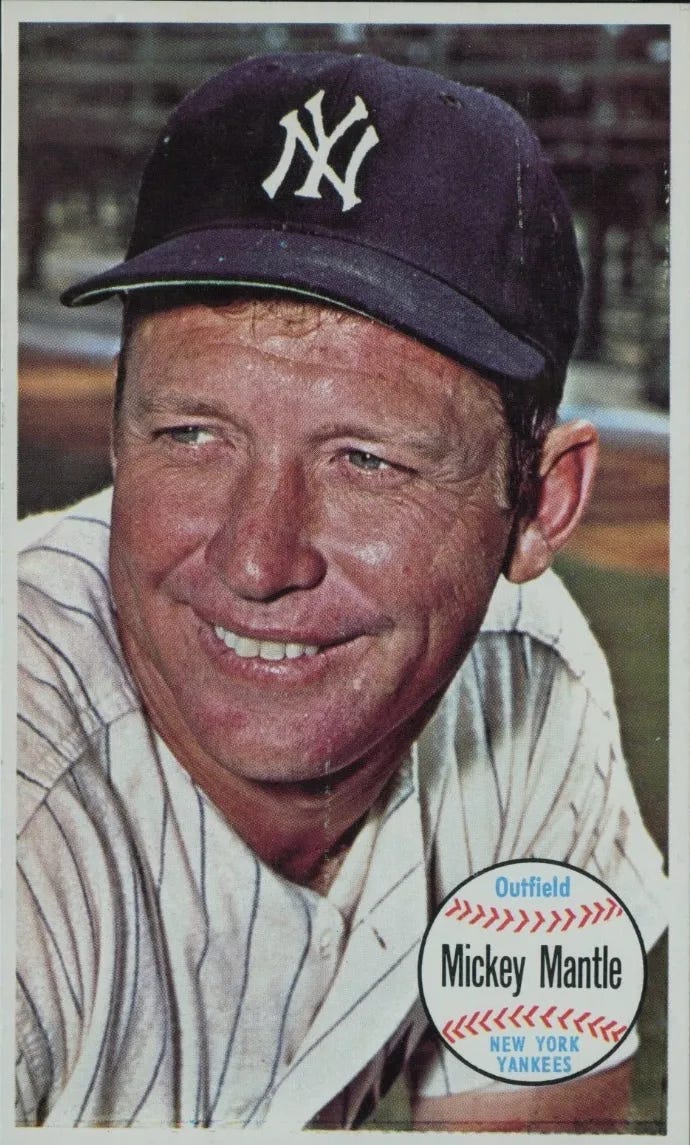
Vintage Example: 1964 Topps #25 Mickey Mantle
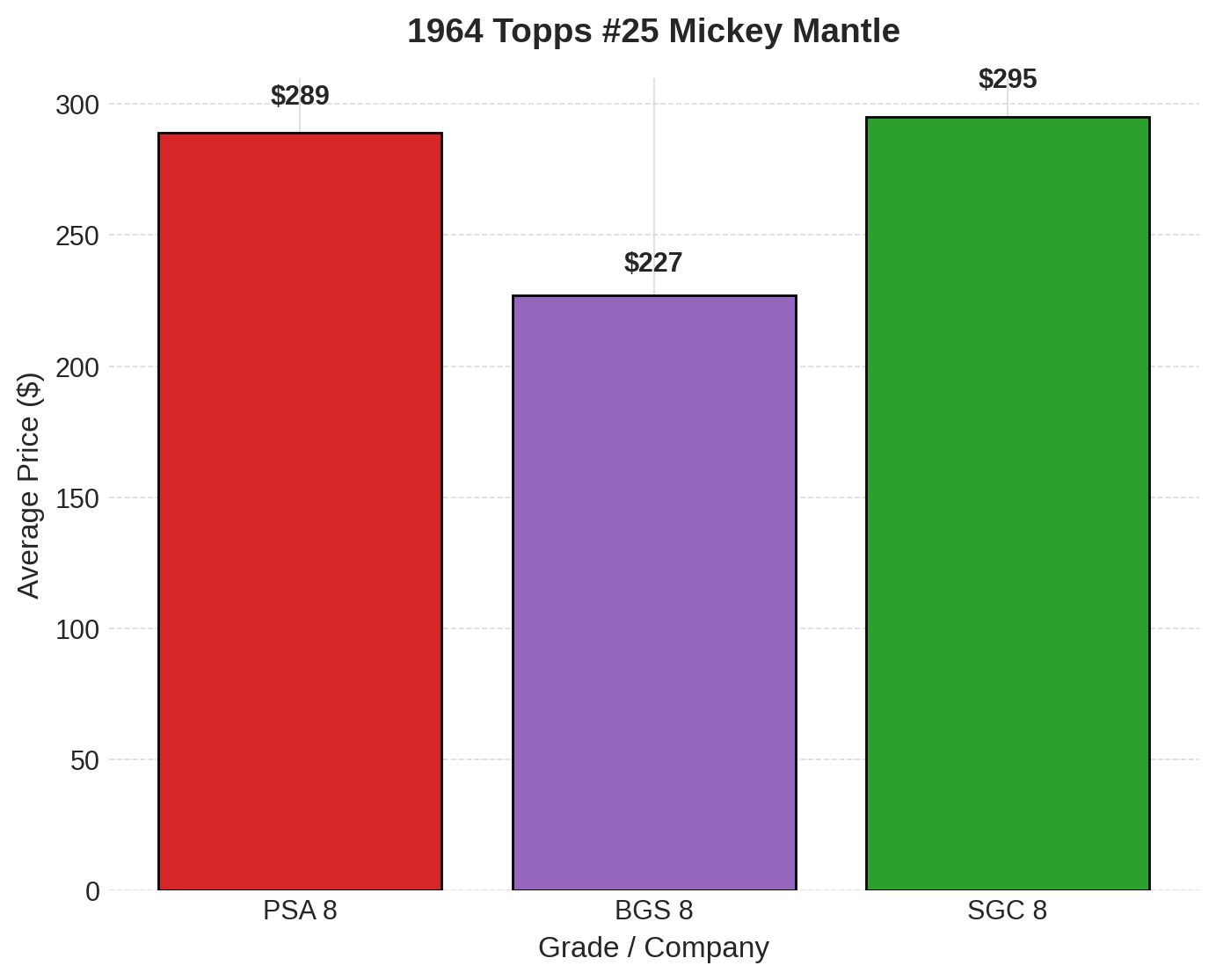
PSA 8: $289 average
BGS 8: $227 average
SGC 8: $295 average
👉 Here the story flips. SGC and PSA are essentially neck-and-neck, while Beckett trails behind. That speaks to SGC’s strong reputation in the vintage market—a place where its slabs are trusted just as much, if not more, than PSA’s.
Takeaway
So, do equal grades hold equal value? Not exactly.
In modern cards, PSA 10s are the safe bet, but a Beckett Black Label remains the crown jewel.
In vintage, SGC proves it can stand toe-to-toe with PSA.
Across the board, PSA slabs command the steadiest premium.
Grading isn’t the backbone of the hobby—it’s just one of many paths collectors can take. But when you do decide to grade, knowing how the market treats each slab helps you make the most of your cards.
Disclaimer: The content in The Hobby Wire is for informational and entertainment purposes only. Commentary, analysis, and opinions on sports cards, rookies, and the hobby are not financial, investment, or professional advice. Collectors should always do their own research before buying, selling, or trading cards. Market values are volatile and can change rapidly—past performance is not a guarantee of future results.
Unless specified, all pricing references are based on the Prizm/Refractor parallels of an athlete's Chrome rookie card, with prices from alt.xyz & 130pt.com.
Any odds mentioned were derived from DraftKings Sportsbook.