

PART ONE: The Plan
The plan sounds simple enough: buy a few cards, flip them during the season, and see if we can come out ahead. But if you’ve spent any time in today’s hobby, you know it’s never as easy as it sounds. This NBA season, we’re putting ourselves — and our strategy — to the test. Together, we’ll try to turn someone’s rookie cards into something bigger, navigating the highs, lows, and surprises along the way. No hype, no hindsight — just an honest look at what it really takes to flip in today’s hobby landscape.
So without further ado, let’s rip into this.
Step 1: Picking Our Player
Even before launching The Hobby Wire earlier this fall, we were already thinking about which players we wanted to take a shot on this NBA season. Alperen Şengün could be a solid play now that KD will draw the defense’s attention. Luka Dončić’s first full season in L.A. could be special. But with a week until tip-off, those storylines look already baked into prices.
This close to opening night, we had to look elsewhere.
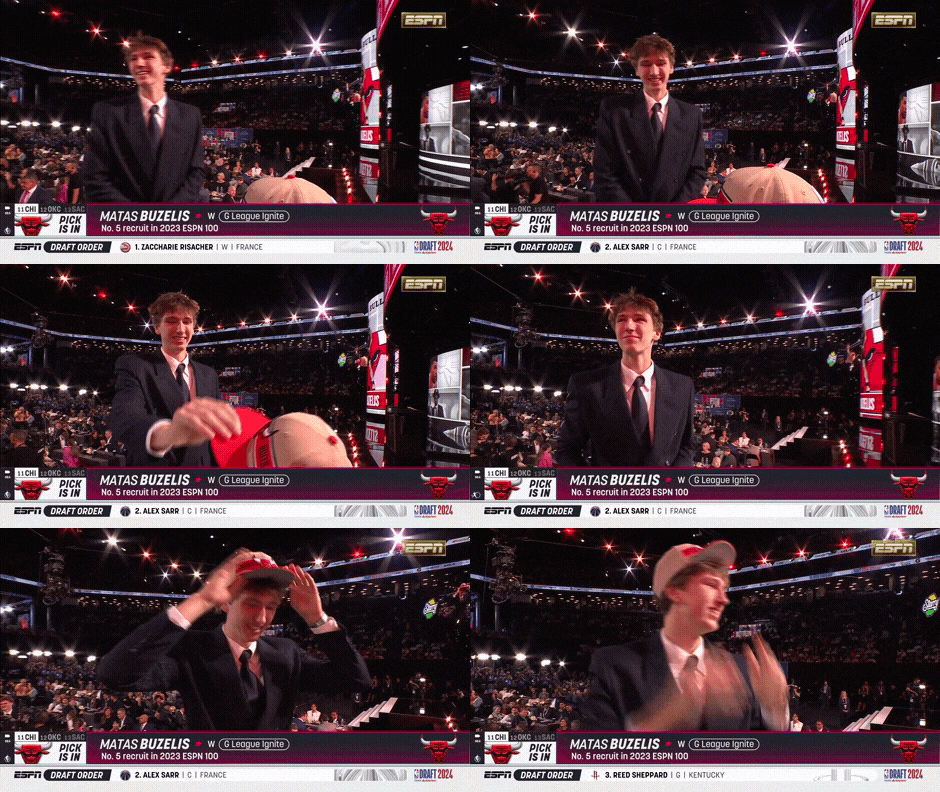
Matas Buzelis, Forward, Chicago Bulls
Buzelis is one of the more intriguing young forwards in the league — 6’10”, skilled, fluid, and still scratching the surface. He’s not a finished product, but the upside is there. If things click, he could easily become one of the better two-way forwards in the East.
He got some late-season buzz last year, but because the Bulls missed the playoffs, the hobby’s attention drifted. Chicago looked best when they played up-tempo — something that suits Buzelis perfectly. We’re expecting more minutes, a bigger role, and a system that leans into his strengths.
We’re also intrigued by the Bulls’ lack of a true franchise face. If Buzelis pops, that spotlight is wide open. An All-Star nod might sound aggressive, but it’s not completely out of the question.
Step 2: Forming the Plan
When we buy cards, we try to think like investors — write down the plan before the emotions kick in. What’s our entry? What’s our exit? How much risk are we actually willing to eat?
Markets shift, hype cycles burn fast, and attention spans are short. But here’s the framework we’re working from:
Buy-in: Pick up a rookie card before the season starts — ideally under $100 for a PSA 10.
Sell trigger: If he heats up before the All-Star break.
Exit point: Unless he’s in the MVP race or the Bulls are cruising near the top of the East, we’re out before or during the All-Star break.
Simple. Intentional. Flexible.
Step 3: Doing the Research
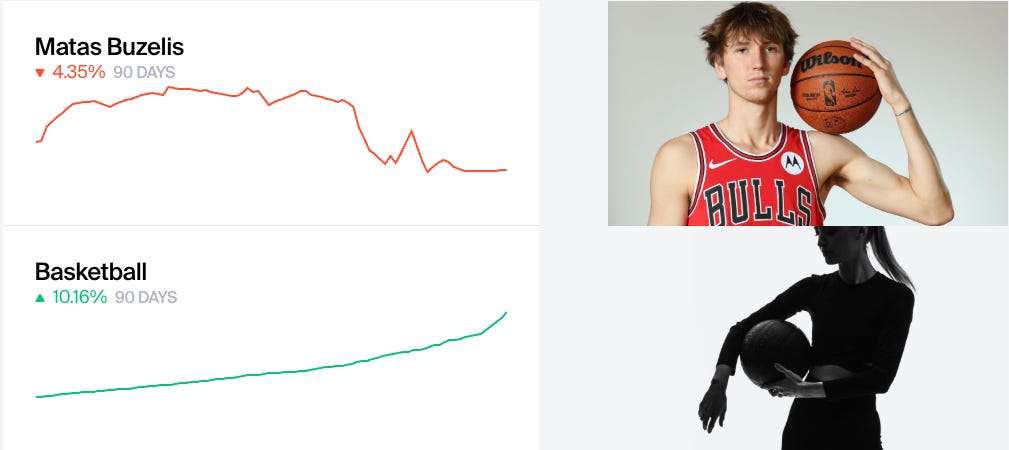
According to Alt, Buzelis’s card prices have actually been sliding compared to the broader basketball market — not performance-based, just a sign that collectors are focused elsewhere heading into the season. That’s fine by us. Opportunity usually hides where the hype isn’t.
We wanted something with both visual appeal and upside, so we started zeroing in on a color-match parallel. Collectors love a clean color match — it just looks right — and that aesthetic bump can translate into real value.
But when we started digging through all the different red Buzelis PSA 10s, reality set in pretty quick: with our current budget, we’re priced out of almost every worthwhile slab.
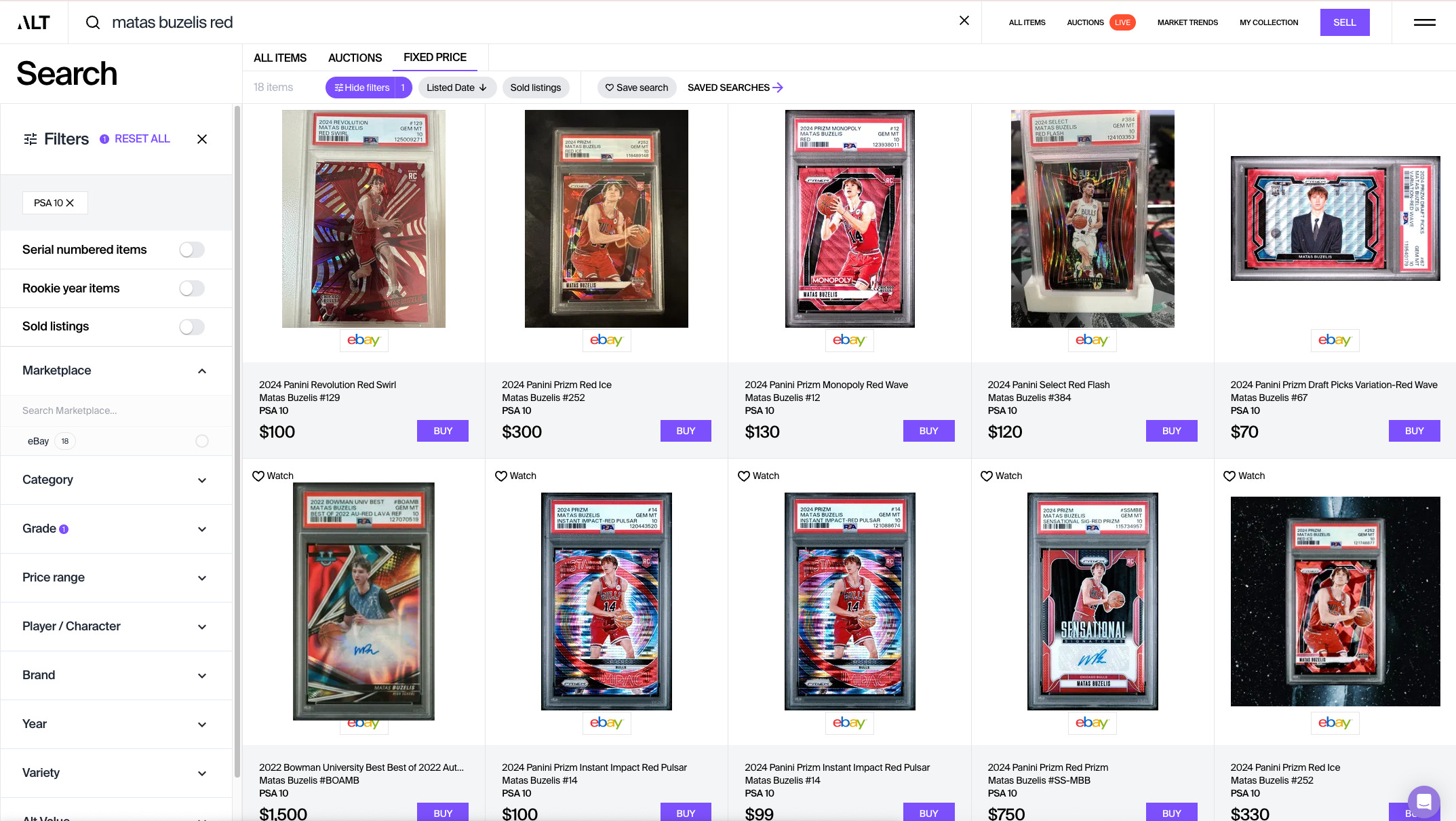
The average chrome stock Buzelis PSA 10 is sitting around $224.63, well north of our $100 cap. That rules out a straight PSA 10 play. So, we pivot.
Instead of chasing a slab, we’ll go after raw cards and see if we can find one worth grading. It adds some risk, but it also opens the door to upside if we can identify a clean copy. Given our All-Star Break timeline, we should just have enough time to grade and get it back.
We really like the look of his 2024–25 Prizm Red Ice Rookie — it’s a color match, it pops visually, and it fits that premium feel akin to a Topps Chrome Sapphire.
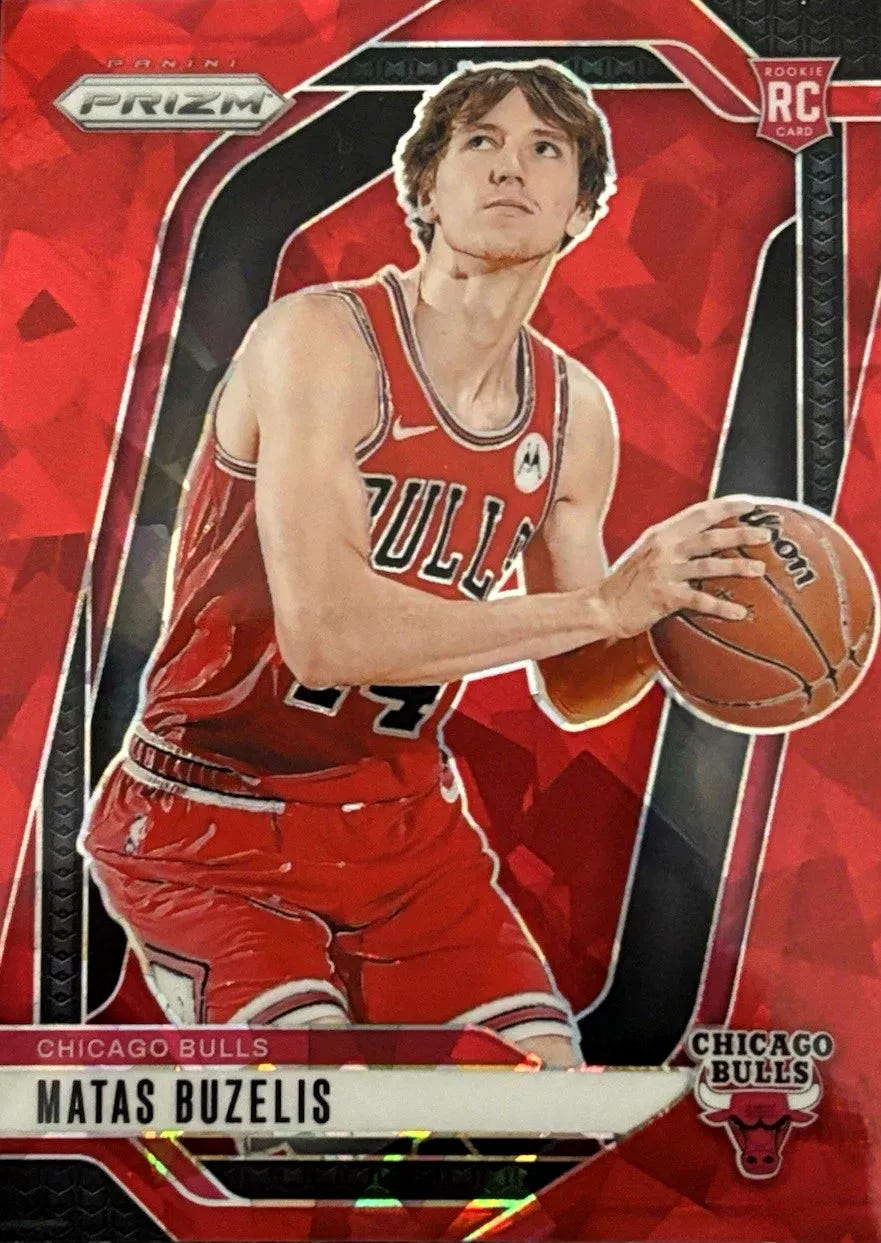
According to 130pt, the Red Ice Buzelis has been selling raw for an average of $15.16 based on the last 5x sales.
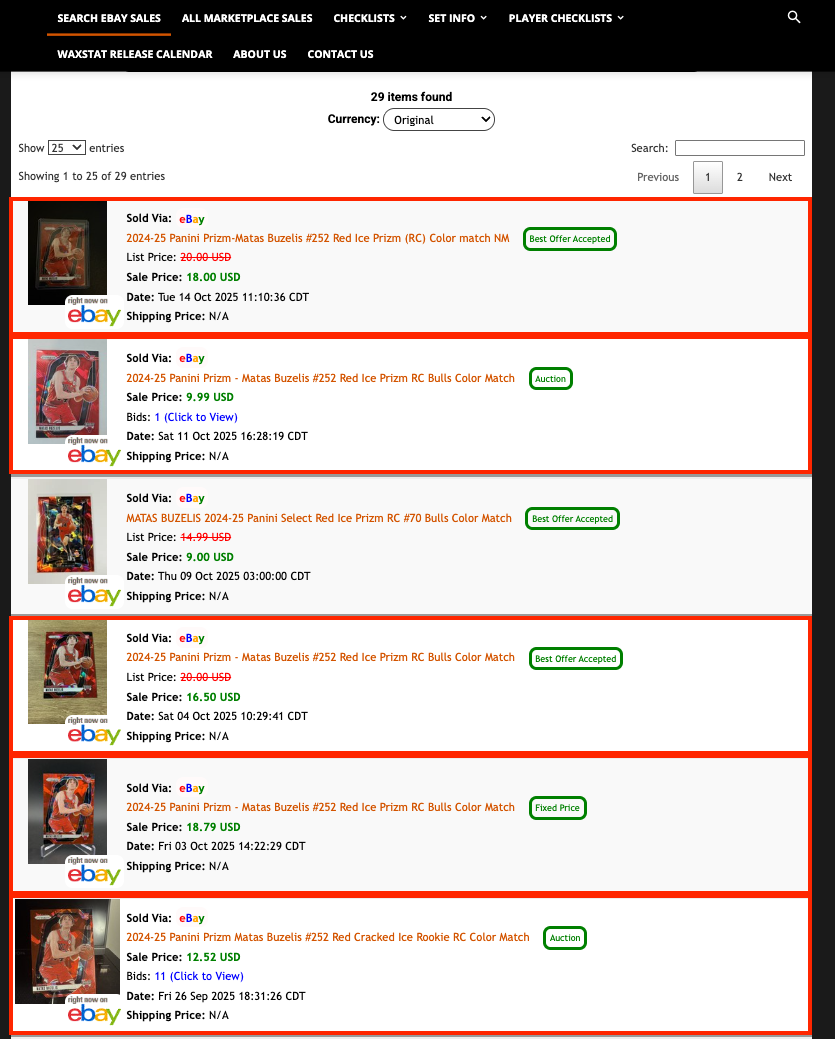
Here’s what the rest of the data tells us so far:
Average raw Red Ice sale (last 5 via 130pt): $15.16
PSA 10 average: $250
PSA 9 average: $26.60
PSA subs: 95
PSA 10 pop: 25 (≈26% gem rate)
That’s the very definition of high risk, high reward. If we buy the right card and it gems, we’re looking at roughly a $200 profit. But if it comes back a 9, we’re basically losing $17 — not breaking even after grading fees.
It’s a gamble, no doubt. But that’s part of the fun. Because of the risk involved, we might grab two raw copies, compare them side by side, and send in the cleaner one.
It’s not glamorous, but this is the kind of decision point that defines flipping in 2025 — balancing data, gut, and a little bit of luck.
Step 4: Finalizing the Play
Here’s our finalized plan heading into opening week:
Purchase 2× raw Red Ice Buzelis Rookie Cards before season tip-off.
Inspect both under good light and choose the best candidate to submit for grading.
Flip the lesser copy if he starts trending up before the All-Star break.
Unless he’s making a legit MVP-type leap or the Bulls are shockingly top-seeded, we’ll look to sell both before or during the break (assuming we get the graded one back in time).
It’s simple enough on paper, but every collector knows how fast a plan can unravel once the season starts. Injuries, hype swings, market corrections — they’re all part of the game.
Now that we’ve got the framework, it’s time to put our money where our mouth is. We’ll be back soon once the purchases are made — and the real flipping begins.
Stay tuned.
Disclaimer: The content in The Hobby Wire is for informational and entertainment purposes only. Commentary, analysis, and opinions on sports cards, rookies, and the hobby are not financial, investment, or professional advice. Collectors should always do their own research before buying, selling, or trading cards. Market values are volatile and can change rapidly—past performance is not a guarantee of future results.
Unless specified, all pricing references are based on the Prizm/Refractor parallels of an athlete’s Chrome rookie card, with prices from alt.xyz & 130pt.com.
Any odds mentioned were derived from DraftKings Sportsbook.