

The 46th National Sports Collectors Convention runs July 29 through August 2 at the Donald E. Stephens Convention Center in Rosemont, Illinois.
Every hobby has a pilgrimage. Ours ends on a convention center floor the size of a small town, packed with dealers, corporate booths, grading companies, auction houses, and roughly every card you've ever wanted to hold in your hands.
The National has been running since 1980. It moves from city to city, and this year it lands in Chicago. Five days. Wednesday afternoon through Sunday afternoon.
Call it four and a half if we’re being precise. Wednesday is only a half day.
If you’re going for the first time, the sheer scale is the problem. It’s impossible to see everything. And the most expensive mistake a first-timer makes isn’t overpaying for a card. It’s showing up on the wrong day for what they actually want to do.
Every day at the National is good for something different. Here’s how we play it.
First, The Ticket
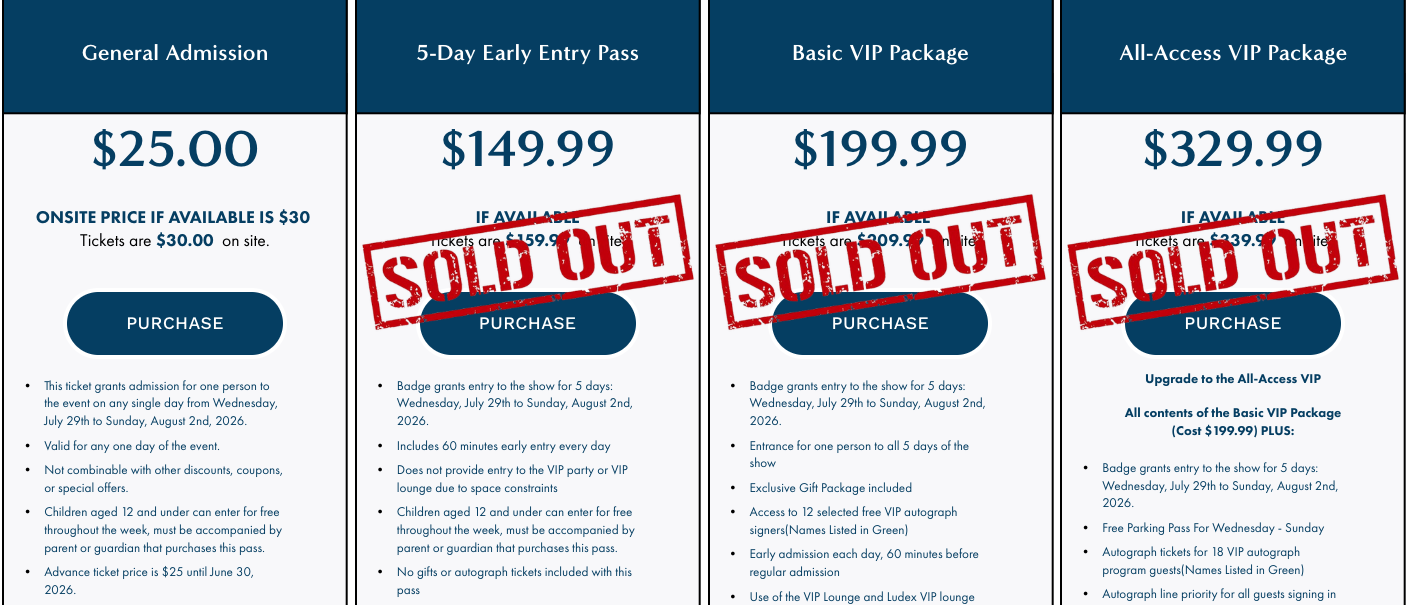
General admission is $30 a day right now, whether you buy it online or at the door. The advance discount window closed at the end of June.
The Early Entry and VIP passes are sold out. We wouldn’t have bought them anyway. The pitch is 60 minutes of early access plus a gift bag, and what we’ve seen come out of those bags in recent years hasn’t moved us. Unless you’re committed to all five days, GA does the job.
Save the money. Spend it on the floor.
Wednesday: Scouting Day
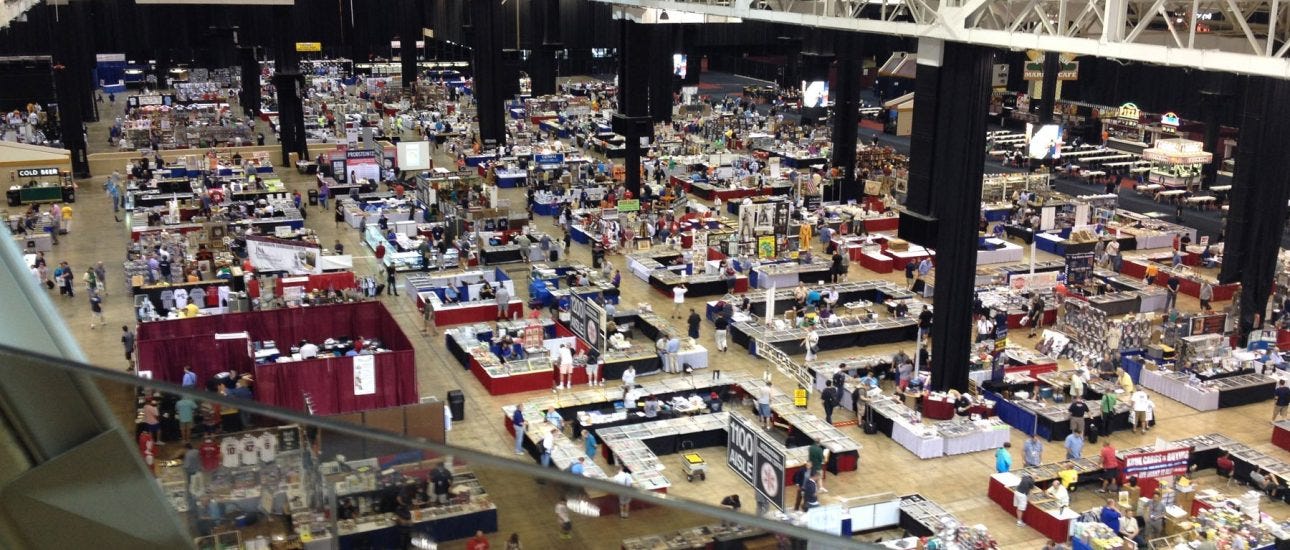
Show hours: 2:00pm to 8:00pm
Not every booth will be fully set up. Some dealers are still unloading, still pricing, still figuring out where the good stuff goes.
That’s fine, because Wednesday isn’t a buying day. It’s a reconnaissance day.
Here’s the trap. You’re walking a floor where every dealer has their complete inventory in front of them for the only time all week. Nothing’s been picked through. It all looks incredible. But those same dealers have four full days left to move that inventory, which means your negotiating leverage is at its absolute weakest. They have no reason to come off the sticker price. None.
So walk it. Take pictures. Note booth numbers. Figure out where the dealers are who actually stock what you collect, and build a map in your head so you can make a beeline on the days that count.
If you’re already in town for the week, Wednesday is a gift. If you’re flying in for two days, this shouldn’t be one of them.
Thursday: Sell High, Dig Deep
Show hours: 10:00am to 6:00pm
The first full day. This is when the floor comes alive and when the math starts working in your favor.
If you’re bringing cards to sell, Thursday is the day. The standard we hear from dealers is 80% of comps. On Thursday that’s a floor, not a ceiling. A dealer has four days left to flip whatever they buy from you, and four days of heavy foot traffic to find the right buyer with. Time is leverage, and on Thursday it sits on your side of the table. Push for a better number than you’d get later in the week.
Just know that the same clock cuts both ways. What helps you as a seller hurts you as a buyer. The dealer sitting on a headline card also has four days of traffic ahead of him, and he knows somebody’s coming for it. He isn’t moving on price yet. Thursday is not the day you land a grail.
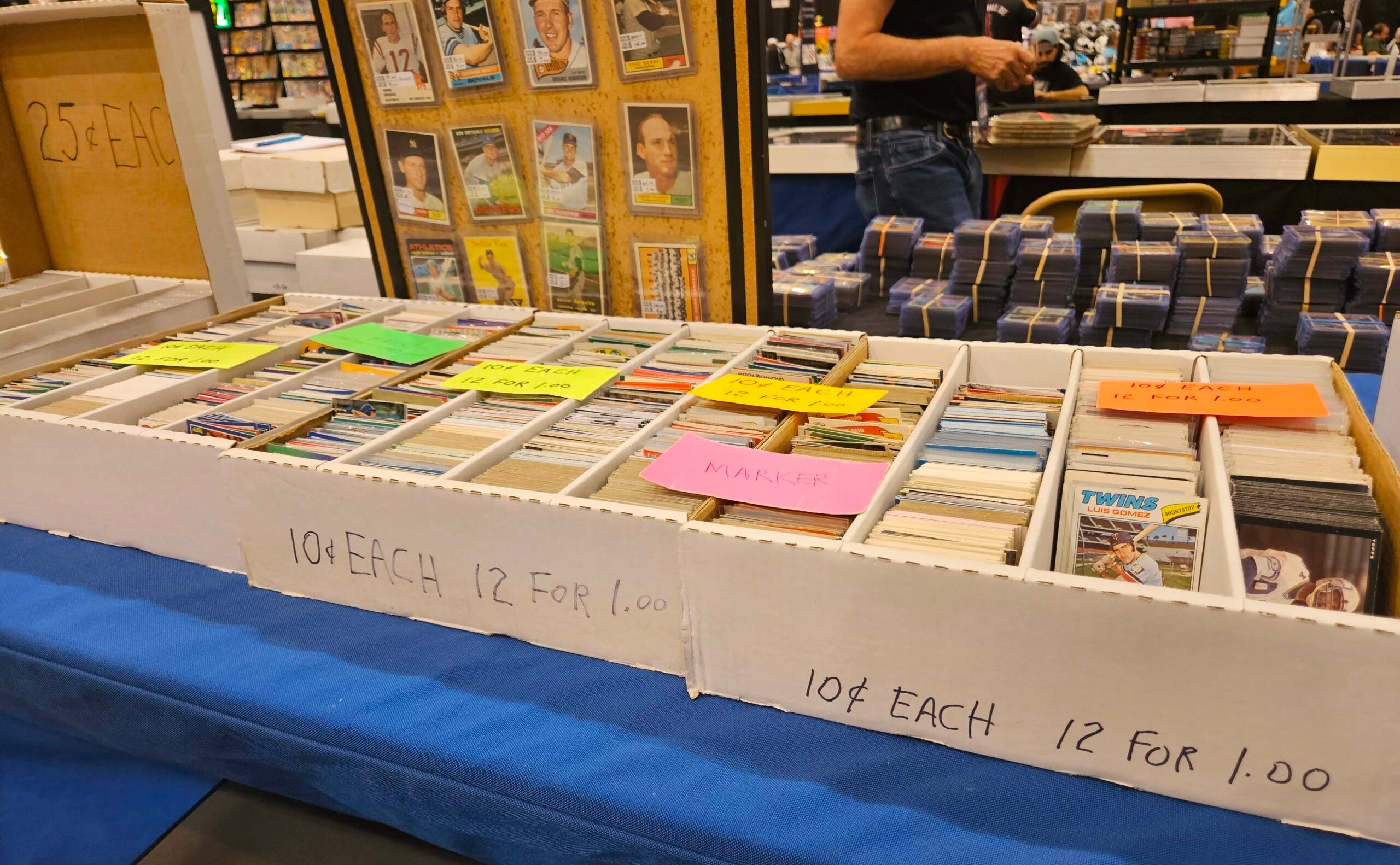
But it is the day for the dollar bins. Barely anybody has touched those boxes yet. Every quality card somebody’s going to pluck out of them this week is still sitting in there right now. Pull up a chair. Get your fingers dirty. By Saturday, ten thousand people have already worked those same boxes over.
On Grading: Drop Off Thursday or Friday
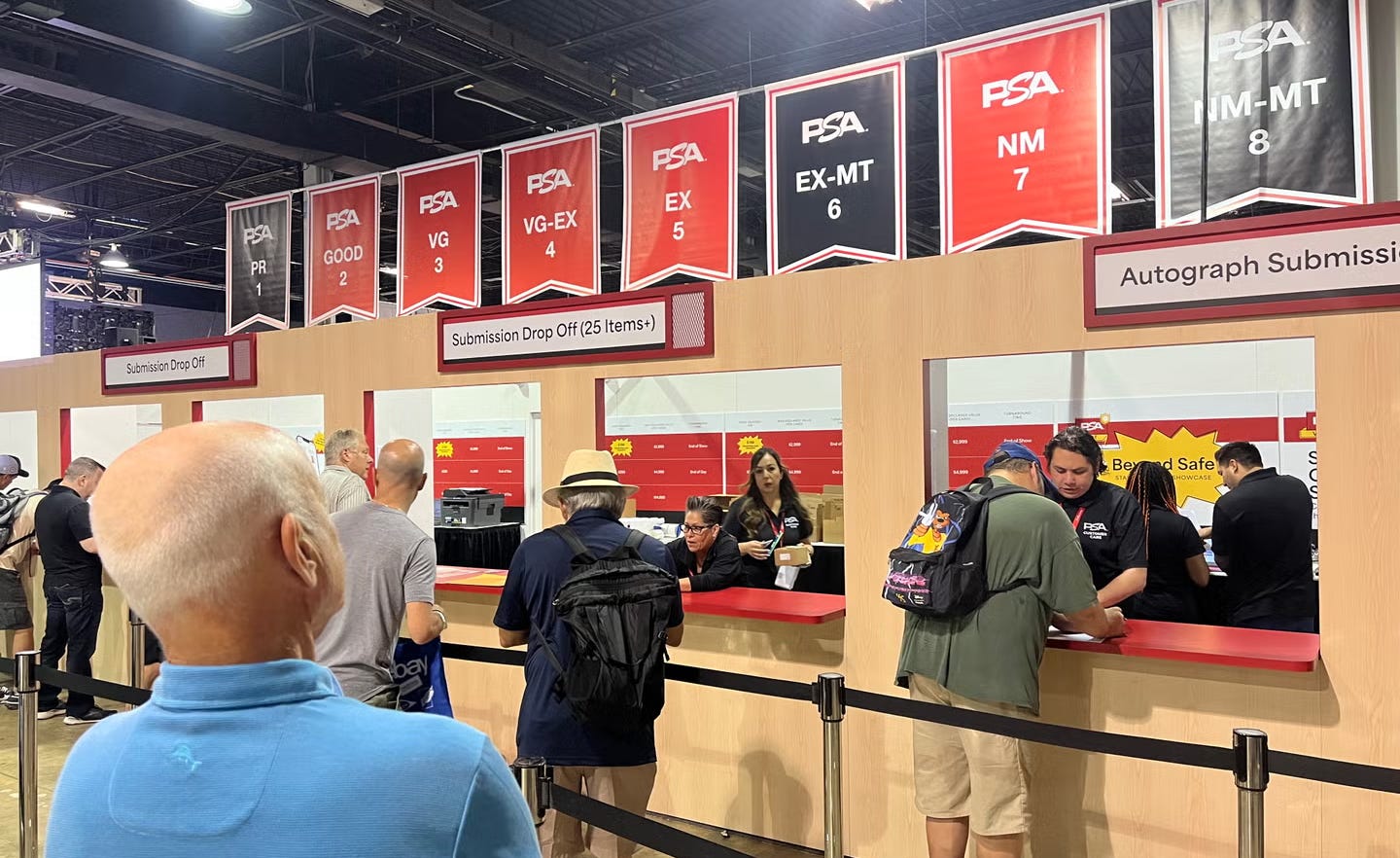
PSA runs on-site grading at the show. It’s fast, and it isn’t cheap.
The cheapest option on the floor is On-Site Express at $229 per card, which covers a max insured value of $2,500 and comes back by the end of the show. Step up to On-Site Super Express and you’re at $399 per card for a $5,000 max insured value, back the same day if you drop off by noon. From there it climbs quickly.
Two questions before you get in that line.
Is this card worth over $2,000 in a gem mint slab?
$229 is a fixed fee no matter what you hand over, which means the entire question is what percentage of the card it eats.
On a $2,000 card, $229 is roughly 11%. Annoying, but survivable, and you’re selling into the densest crowd of buyers the hobby assembles all year.
On a $500 card, that same $229 is nearly half the value of the card. You just paid a grader more than the card is worth to most of the people walking past you.
If your card lands under $2,000, mail it in. The slab doesn’t grade any higher because you got it faster.
Do you need to flip it right away?
If the answer is no, there’s no reason to be standing here. The premium you’re paying is for speed, and speed is only worth something if you’re using it. If you’re grading a card for your PC and it can sit in a mailer for a few months, let it sit in a mailer for a few months.
Two yeses, go grade it. One no, mail it in and spend the difference on the floor.
And know that you’re coming back.
Unless you’re paying for same-day service, on-site grading is a multi-day commitment. But read that return window carefully, because it’s a deadline, not an appointment. Express cards come back by the end of the show, not at the end of it. We dropped off on a Friday a few years back and it was ready by Saturday afternoon.
Submissions close Saturday at noon. Hand something over on Saturday and Sunday is the earliest you’re seeing it again. That’s fine if you planned for it. It’s a problem if you flew home Saturday night.
Drop off Thursday or Friday and you’ll have the slab back with time left to actually sell it.
Friday: The Best of Both Worlds
Show hours: 10:00am to 6:00pm
If we could only go one day, this is the one.
Friday has a split personality, and that’s exactly what makes it work. During business hours, the floor is thin. People are at their jobs. You can actually move. Then the whistle blows, the after-work crowd pours in, and by evening it feels like a completely different show.
Play both halves.
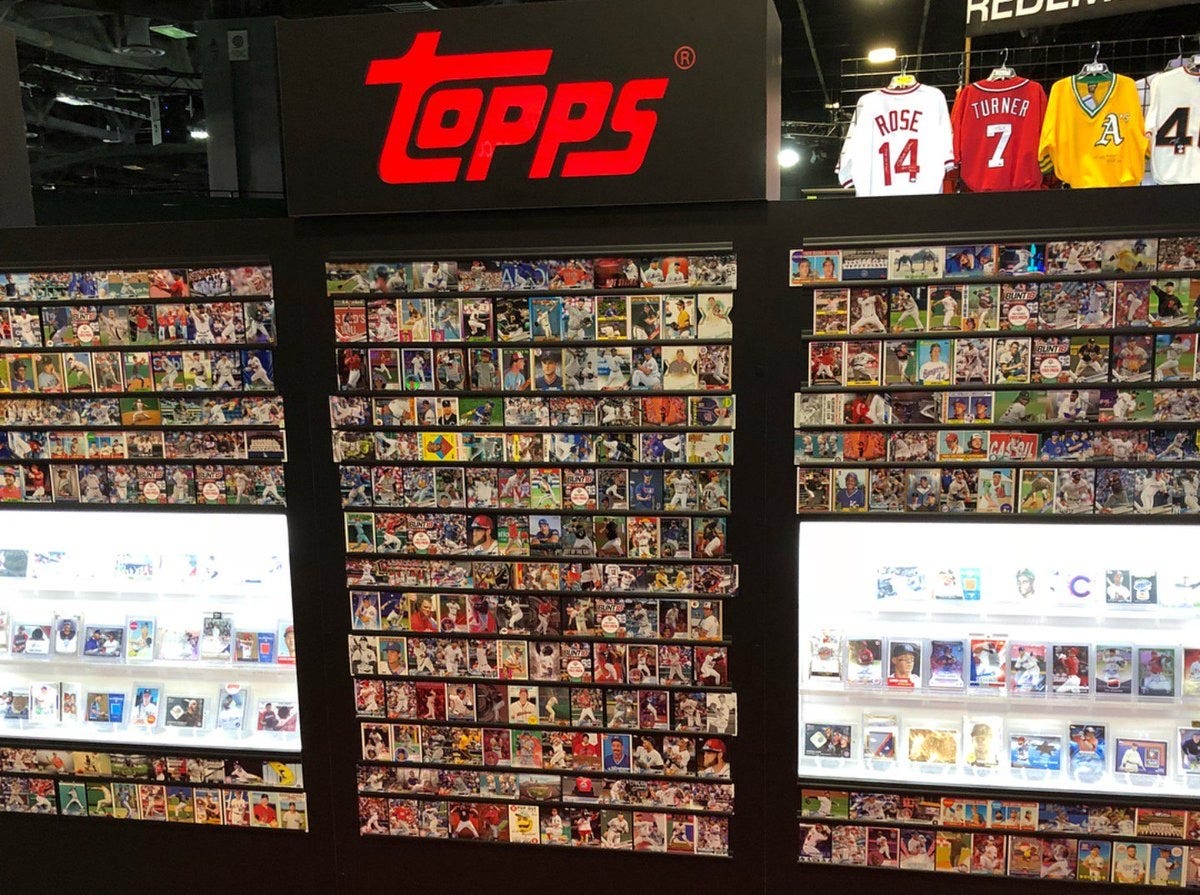
Morning and early afternoon: hit the corporate booths. This is the window. Fanatics, Topps, Panini, Upper Deck, the grading companies, the newer platforms. On Friday morning, you walk up. On Saturday, you wait an hour.
And don’t sleep on those booths. The freebies at the National have real value. Shirts, hats, hobby packs, graded slabs, and yes, occasionally hobby boxes. Last year we stood in line at the Fanatics Collect booth for a free slab and walked away with a Jayson Tatum PSA 10 that we later sold for around $70. That’s a free card that paid for the ticket, the parking, and lunch.
At the Courtyard.io booth, about five people ahead of us, someone pulled a Beckett 10 Luka Doncic Silver Prizm rookie. We got an Anthony Richardson Panini Instant rookie. Not exactly a grail.
But a free slab is a free slab. We’d wait again.
One update worth knowing: Topps is not running Wrapper Redemption this year. Instead you’ll be able to buy National exclusive packs directly at the Topps booth. In past years, getting into that program meant buying hundreds of dollars of hobby boxes first. This should be easier on the wallet. We’ll see what the packs actually cost.
Afternoon and evening: go wheel and deal. Once you’ve cleared the corporate area, spend the back half of the day working the dealer tables while the energy builds.
Friday gives you the whole National without the worst of the lines.
Saturday: The Big One
Show hours: 10:00am to 6:00pm
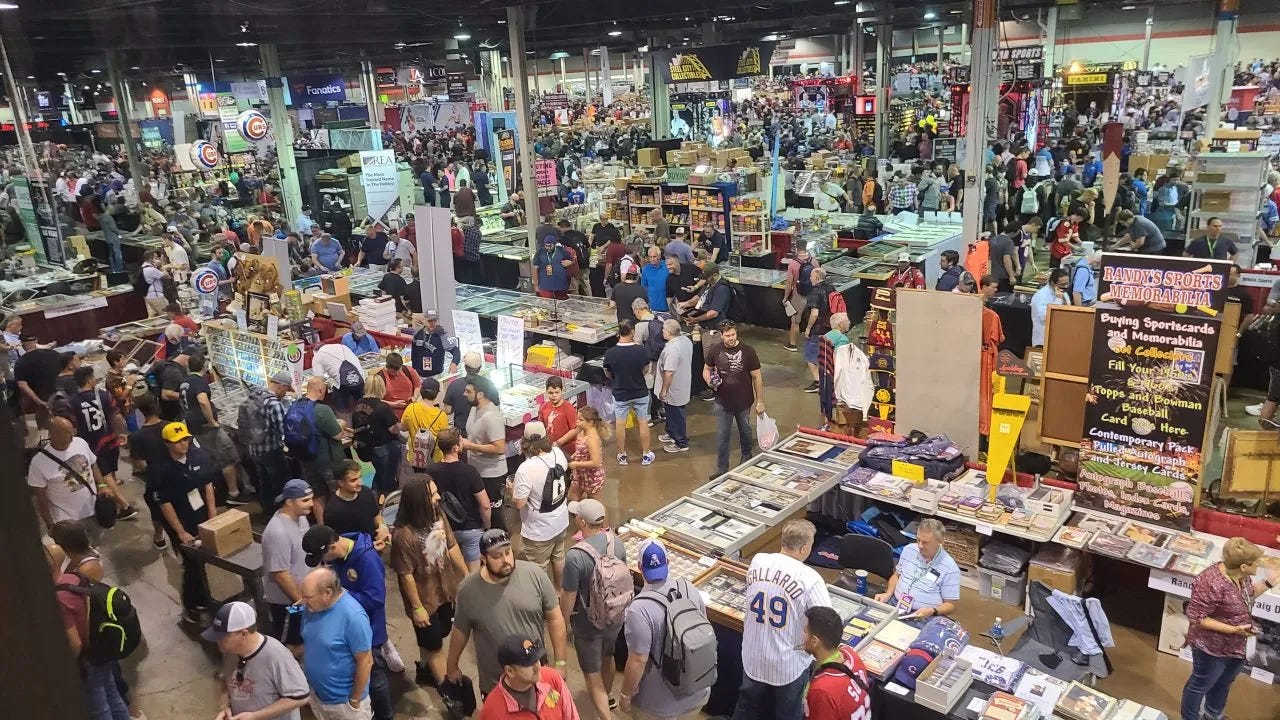
Saturday is the busiest day of the convention by a wide margin. Every casual collector, every family, every local who could only get one day is walking that floor.
The conventional read is to avoid it. We don’t fully agree.
Trading activity peaks on Saturday. Buying, selling, swapping, it’s all happening at maximum volume. If you want to move cards, find cards, or just experience what the hobby looks like at full throttle, this is the day it’s happening.
The corporate booths are the problem. Lines wrap around the floor. We’ve spent over an hour waiting for a single free card on a Saturday. If you have the luxury of multiple days, stay out of that section entirely and handle it on Friday.
Saturday is for the floor. Not for the lines.
Sunday: Deal Day
Show hours: 10:00am to 4:00pm
Here’s the thing about the last day of a five-day show. Every dealer on that floor is looking at their inventory and doing the same calculation.
Do I want to pack this up and drive it home?
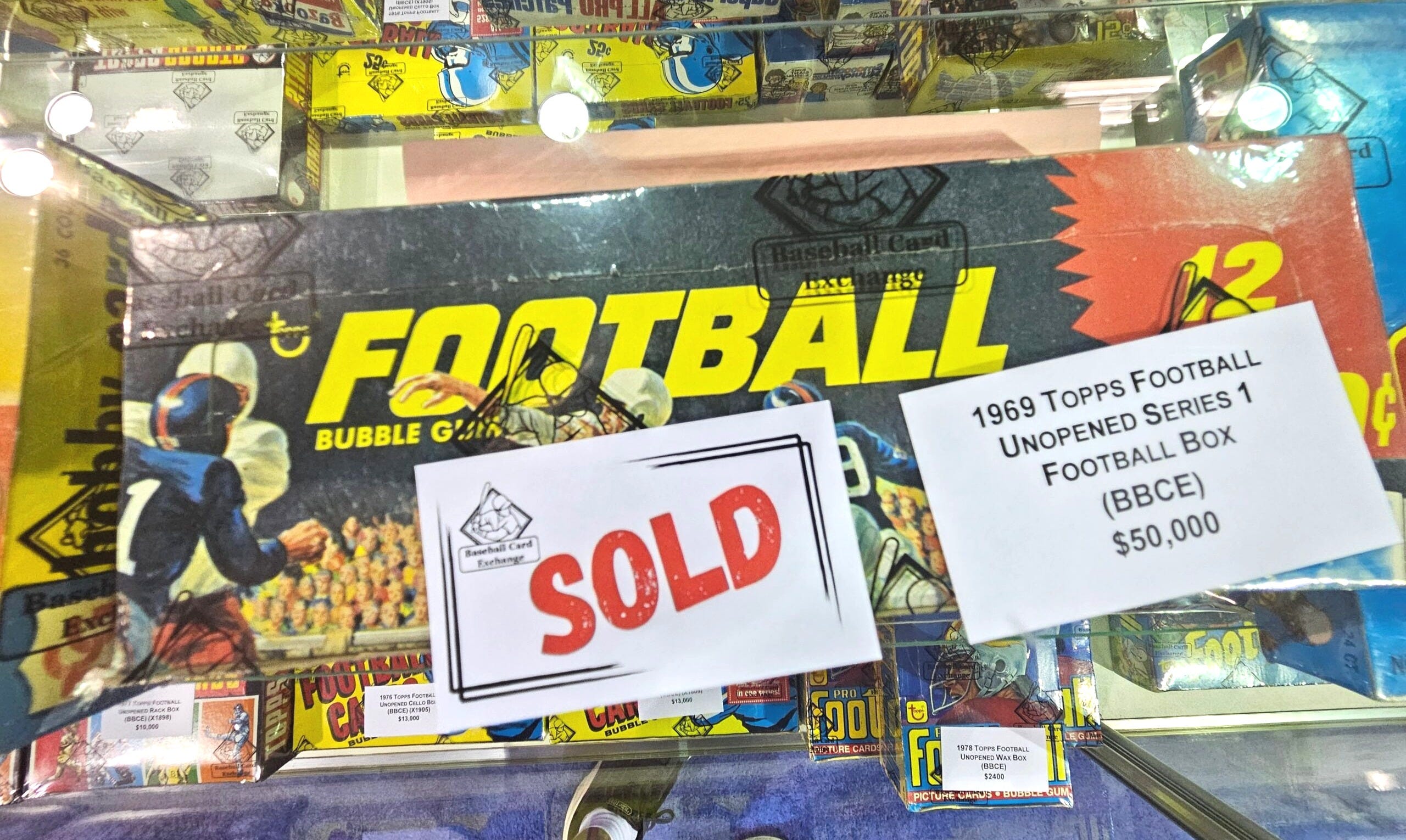
That question is worth real money to you. Sunday is when prices break. It’s true for the small guys and it’s true for the big ones. We’ve seen cases of wax at Dave & Adam’s and Blowout marked down by hundreds of dollars on the final day. Nobody wants to freight it back.
The tradeoff cuts the other way. Pickings are slim. The best cards left the building days ago, and some dealers won’t even be there.
Which brings us to the most important thing we can tell you about Sunday: go early. The show says it closes at 4:00. The show does not close at 4:00. Tables start breaking down well before then, and if you roll in at 2:00 you’re shopping a ghost town.
And do not try to sell on Sunday. Nobody’s adding inventory on getaway day. At the 2023 National, we tried to move a Bobby Witt Jr. rookie numbered to 10. The best offer we could get was 65% of comps. We passed and took it back home.
Sunday is for buying. Full stop.
Everything Is Negotiable
This is the part that gets first-timers, so we’re going to be blunt about it.
Booths at the National start with inflated sticker prices. More inflated than at your local show, more inflated than at a regional. That’s the game. The number on the toploader is an opening bid, not a price.
Negotiating isn’t optional. It’s the transaction. Either you’re bringing the price down or you’re getting more cards thrown into the deal, but you’re doing one of the two.
Which only works if you know what the card is actually worth.
Last year, we picked up a 2017 Bowman Aaron Judge rookie and a Bryce Harper prospect card for $50 total. We walked away feeling like we’d robbed the guy.
Then we got home and comped them. The Judge was worth $30. The Harper was worth two dollars.
We didn’t get robbed. We just didn’t do our homework, and the homework takes ninety seconds. Know what you’re hunting before you walk in, and pull up comps on your phone before you shake on anything. The name on the card is not the value of the card.
Cash is king, same as any card deal. Plenty of booths take Venmo. We keep a card on us for the bigger vendors like Blowout, but for the dealer tables, bring paper.
Two Things We Can’t Help You With
Thursday, Friday, and Saturday, the show runs Trade Night from 6:00pm to 11:00pm.
We’ve never gone. So we’re not going to pretend to have a take on it. If you’ve done it and it’s worth the extra hours, tell us, because we’d like to know before we get to Rosemont.
Same goes for the Autograph Pavilion. Tristar runs a signing lineup deep enough that it’s practically a convention inside the convention, and you could burn an entire day in there without touching the show floor. That’s just not why we go. If autographs are your thing, budget a full day for it and plan the rest of your trip around that, because it will eat one.
So How Would We Do It?
We’re not going to hand you a single right answer, because the right answer depends on what you’re chasing.
But if you’re coming to your first National, we’d say go two days, and make Friday one of them. Friday gives you the most complete version of the show at the lowest cost in lines. That’s the anchor.
Then pick your second day based on your goal:
Chasing bargains? Add Sunday. Get there when doors open.
Selling cards or digging through dollar bins? Add Thursday.
Want to see the hobby at full volume? Add Saturday, and skip the corporate lines.
Going every day? Wednesday is free reconnaissance. Use it.
The National is overwhelming by design. There’s more floor than any one person can cover in one day and more temptation than any one wallet should absorb. The collectors who come away happy aren’t the ones who saw everything.
They’re the ones who knew what they came for.
Which brings us to the awkward part. We’d love to take our own advice here. But we couldn’t get Friday off work, so we’ll be doing this the hard way, on the busiest day of the show, with everybody else.
Do as we say. Not as our PTO allows.
So we’re doing a little of everything in one day. Corporate booths we told you to hit on Friday. Dollar bins that ten thousand people got to first. Dealer tables at peak volume, with no leverage and no second chance to come back tomorrow. We’ll report back on how much of our own advice survives contact with a Saturday floor.
We’ll be on the floor in Rosemont, wearing a Hobby Wire shirt. If you spot us, come say hi.
And if you’re going, tell us what you’re hunting in the comments. We’ll be checking.
Disclaimer: The content in The Hobby Wire is for informational and entertainment purposes only. Commentary, analysis, and opinions on sports cards, rookies, and the hobby are not financial, investment, or professional advice. Collectors should always do their own research before buying, selling, or trading cards. Market values are volatile and can change rapidly—past performance is not a guarantee of future results.
Unless specified, all pricing references are based on the Prizm/Refractor parallels of an athlete’s Chrome rookie card, with prices from market movers, alt.xyz & 130pt.com.
Any odds mentioned were derived from DraftKings Sportsbook.
Great info.
Take your time , be patient. Don’t over pay just to overpay .
Will be my first National show so this is extremely valuable. Was at a trade show in March at same venue and in my opinion so much better value than the tables, raw cards primarily. Would love to hear what others say about Trade night at the National