

Pulling a jersey patch card is always a thrill — but let’s be real, not all patches are created equal. Some swatches carry real game history, others barely brushed the player, and a few never saw a field at all. We’re not chasing RPAs or Logomen here — instead, we’re zooming in on the everyday stuff. Game-Used, Event-Worn, Player-Worn, Manufactured. Do those labels actually change what a card’s worth? Let’s find out together.
Picking our Player
Before diving in, we needed a player that would give us plenty of data points to work with. So we set a few ground rules:
The player has to be a star on their team (and in the sport).
The patches in question must not be from the player’s rookie year. (Due to production turnaround, a lot of RCs don’t have game-used patches unless they’re from high-end product, which could skew pricing)
No players with rollercoaster seasons, since price volatility would muddy the waters.
With all of that in mind, the player we landed on is Bobby Witt Jr. of the Kansas City Royals — specifically his jersey patches from the Topps Flagship/Update Sets of 2023 & 2024.

We’re excluding 2025 for now to avoid recency bias in the pricing. With our player locked in, let’s rip in.
Game-Used
A game-used patch is exactly what it sounds like. It’s a guarantee from the card company that the piece of cloth in your card comes from a jersey that was worn in an actual game. In some products, Topps has even started putting authenticity stickers right on the patch — which lets you look up exactly which game the jersey came from.
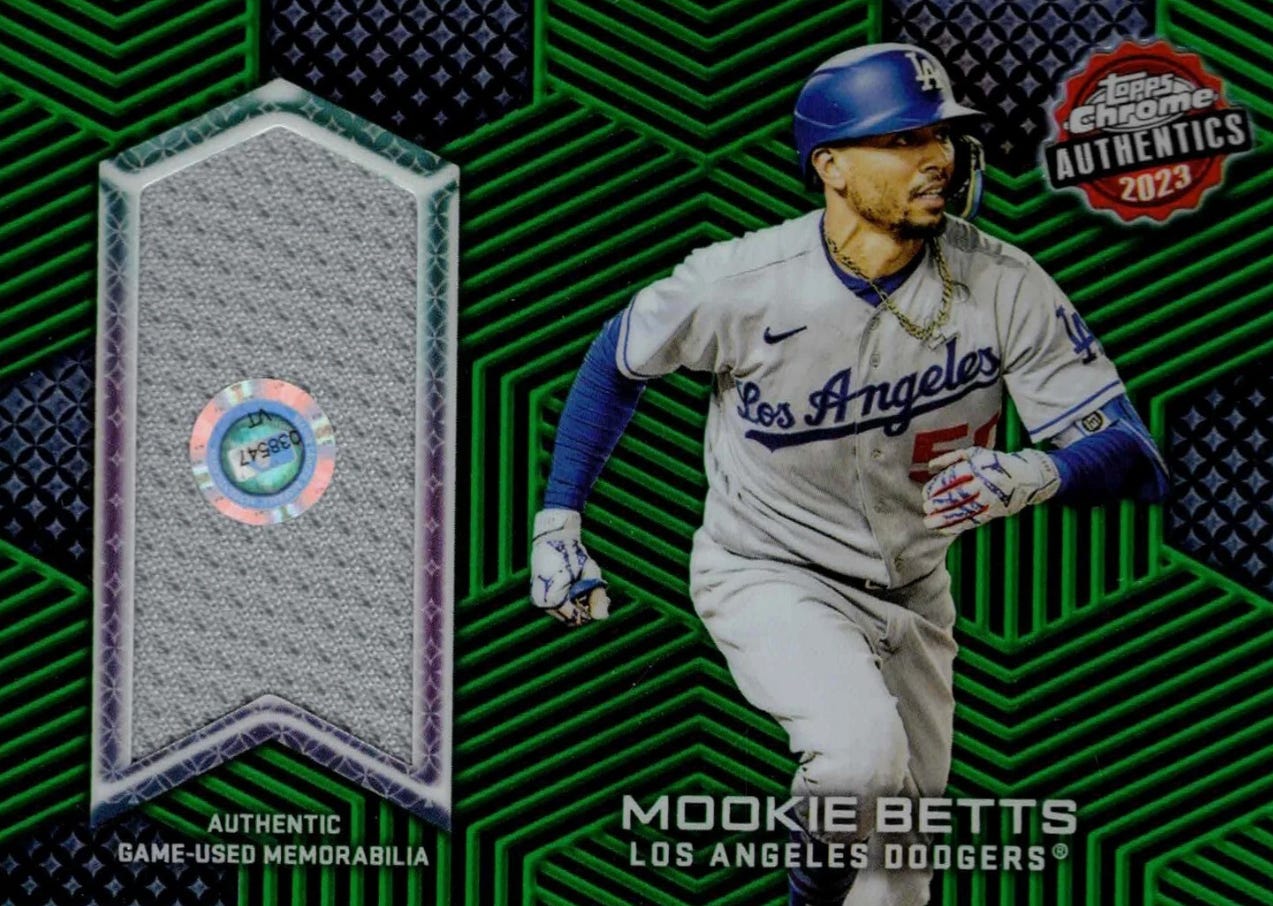
Hopefully that becomes more standard, because in a hobby full of speculation and rumor, transparency is king.
The card we’re looking at for our sample is the Bobby Witt’s 1988 Relic from 2023 Topps - Series 2.
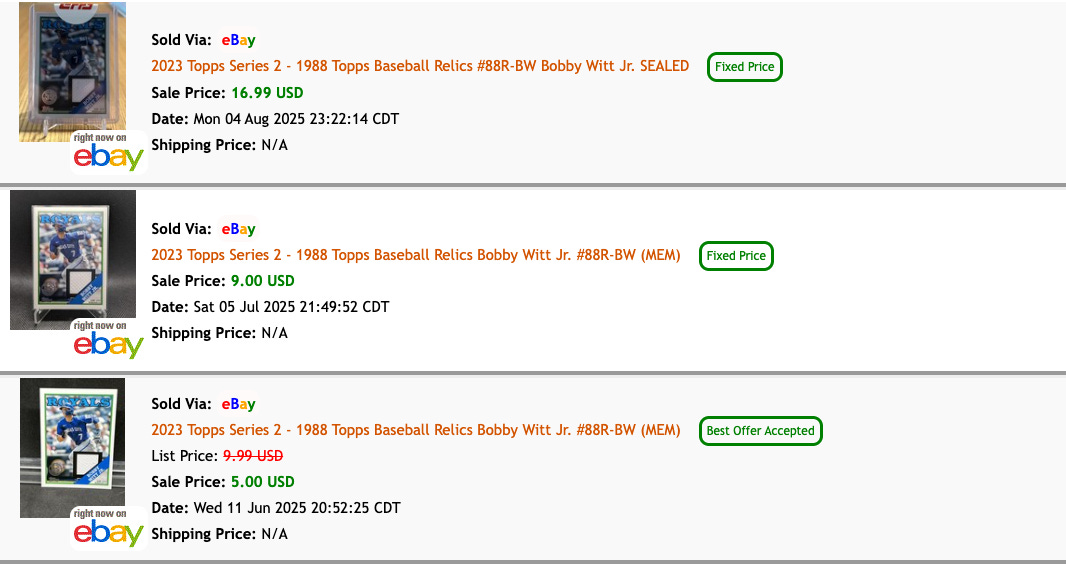
There were only three sales to go off of for the last few months. Because of the potential markup on the August 4th sale because of the card being “SEALED”, we’ll be excluding that price and determining the average value of this card to be $7.00.
Event-Worn
Event-worn patches are jerseys that weren’t worn in a game, but instead during an event — anything from a press conference to a pre-game warmup. For baseball, you’ll see this notation on cards having to do with the All Star Game, which is exactly the type of card we’re going to look at for Bobby Baseball.
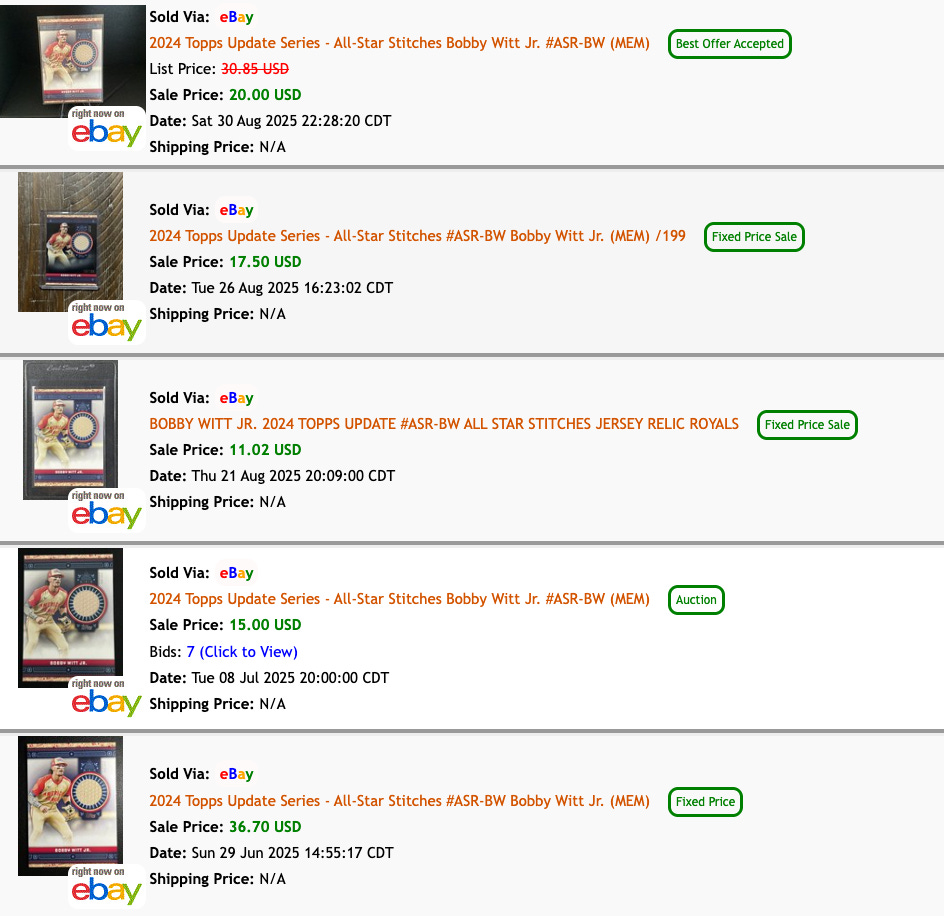
Black parallel excluded — Bobby Witt Jr.’s event-worn 2024 Topps All Star Stitches Patch is selling for a decent amount in raw value, despite not being worn during the actual All Star Game. Average price since late June has been $20.68.
Player-Worn
Player-worn means exactly that — the jersey was worn by the player, but not necessarily in a game or event. Sometimes, it’s as simple as the card company mailing out a stack of jerseys for the player to try on and send back. All the card company needs to do for a player-worn patch is be able to say that it was on the player.
Here’s where things get interesting. In 2023 Topps Series 2, Witt’s 1988 Relics were labeled as game-used. But in Series 1, they were player-worn. Similar card design, different patch designation.


Surprisingly, the player-worn version is selling for more — averaging $12.50 compared to the $7.00 game-used.
Manufactured Patches
Manufactured patches aren’t tied to any player or event. It could be designed by the company or even fabric pulled straight off the rack at a sporting goods store. On some Panini products, you may see this descriptor.
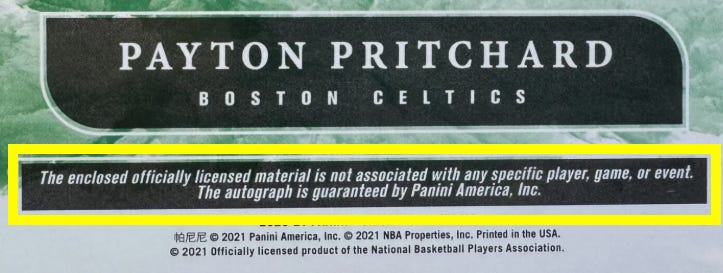
During the pandemic, these became more common out of necessity, but even now they still pop up in new releases.
Because we chose Bobby Witt Jr., we stayed away from Panini products since they never had a license with MLB and we were thinking that might affect the pricing of the cards we’re sampling. Luckily, in 2023 Topps Series Two, they were putting manufactured Father’s Day Patch Cards into every blaster box.
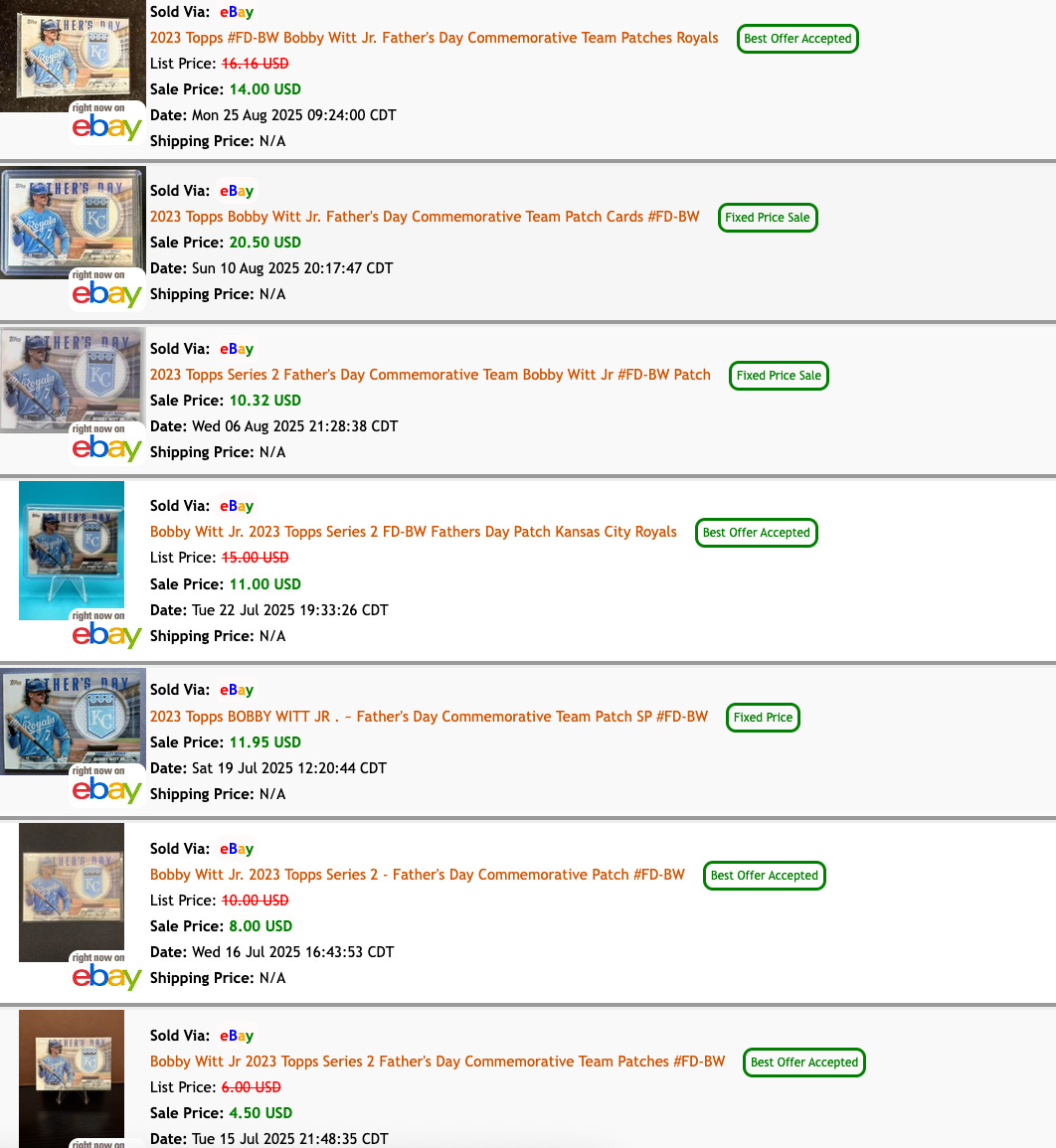
These actually had the highest trading volume of anything in our sample — averaging $11.47.
So What Does This Mean?
Honestly, we were surprised too — the patch with the most “real” connection to the field turned out to be the cheapest one. So, we had to double check our work. Another commonly pulled game used jersey patch that can come out of 2023 Topps is the “Major League Materials” card. We chose the 1988 relic to start because it’s a slightly larger patch.
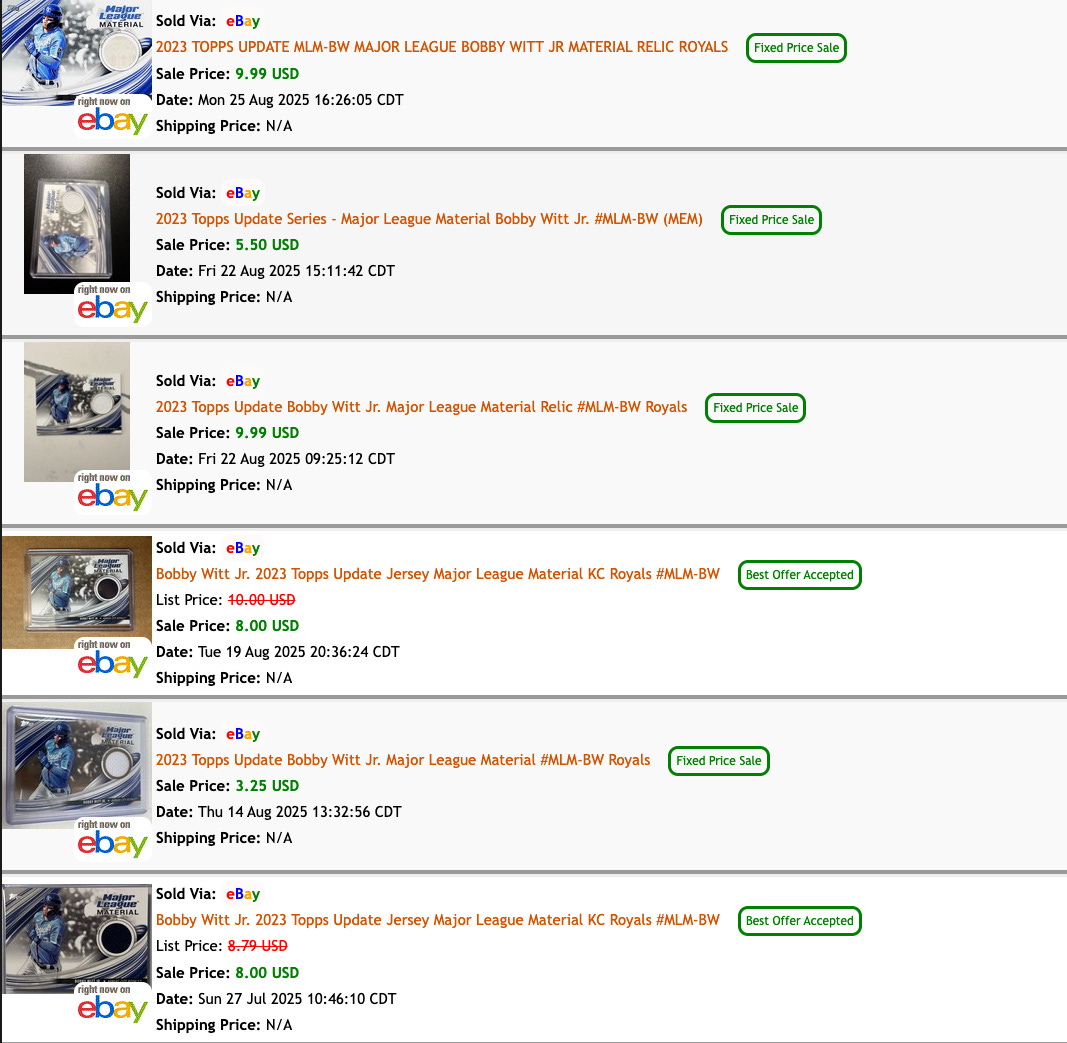
While trading volume was higher than the 1988 patch, this card still averaged about the same in price at $7.46.
So what does this all mean for collectors and sellers alike? With the information we collected here today there are a couple of things we can speculate.
The average collector doesn’t read the fine print. It’s possible many buyers don’t distinguish between “game-used,” “player-worn,” or “event-worn” — they just see “jersey patch” and move on. If that’s the case, then prices aren’t being driven by authenticity at all.
Aesthetics drive prices more than authenticity. The All-Star Stitches patch, which sold for the most, is also the best-looking card in the bunch — vertical layout, clean design, matted finish, pops of color. Collectors might simply be paying for aesthetics over provenance.
Conclusion
Every collector has their own preferences, but the trend seems clear: looks may matter more than legitimacy. That might sound frustrating for purists, but it’s actually good news — because right now, you can pick up true game-used patches at bargain prices.
Here at The Hobby Wire, we just think it’s fascinating that design and eye appeal are carrying so much weight in the market.
Whether you like what your read or have a different opinion all together, we’d love to read your thoughts in the comments. Got a suggestion on how we could have done this better? Let us know. Maybe we’ll try this again down the road.
That’s what The Hobby Wire is all about — learning from each other and keeping the dialogue going.
Disclaimer: The content in The Hobby Wire is for informational and entertainment purposes only. Commentary, analysis, and opinions on sports cards, rookies, and the hobby are not financial, investment, or professional advice. Collectors should always do their own research before buying, selling, or trading cards. Market values are volatile and can change rapidly—past performance is not a guarantee of future results.
Unless specified, all pricing references are based on the Prizm/Refractor parallels of an athlete's Chrome rookie card, with prices from 130pt.com.
Any odds mentioned were derived from DraftKings Sportsbook.