

We got a message in the inbox recently that piqued our interest. One of our subscribers wrote in asking us to help identify baseball prospects worth investing in.
It’s a question we love, because baseball prospecting is one of the most interesting—and most misunderstood—corners of the hobby. And it’s getting tougher, with prospects reaching the show faster than ever.
Our response was detailed enough that it deserved its own piece. So instead of leaving it buried in a DM, here’s how we approach baseball prospecting from the ground up.
Start With the Right Cards
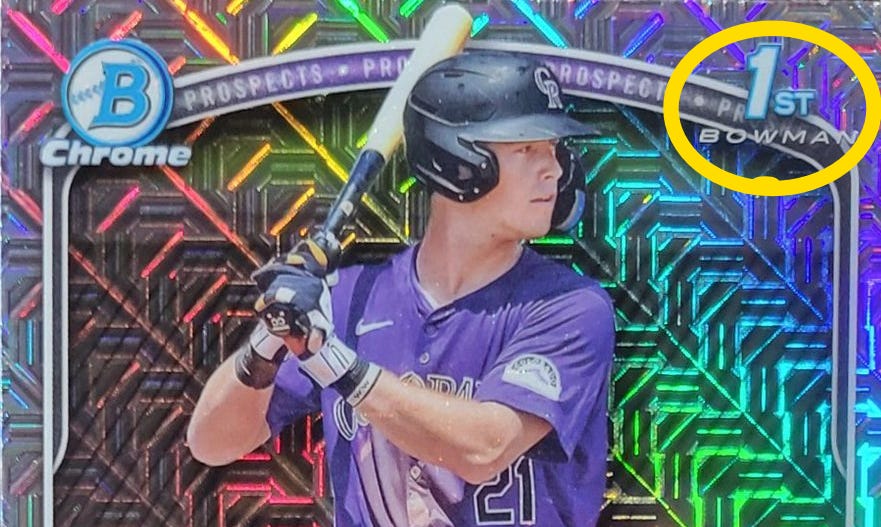
Before you start chasing names, you need to know which products actually matter. In baseball, the prospect conversation starts and ends with Bowman.
Specifically, you want cards that carry the 1st Bowman designation. Those are a player’s first licensed cards. That stamp carries weight—and it drives a meaningful portion of a prospect card’s long-term value.
Not every Bowman product qualifies. Bowman’s Best, for example, produces beautiful cards. But they don’t carry the 1st Bowman designation, which puts a ceiling on long-term performance. For that reason, we don’t mind skipping it.
So for starters, stick to the three major Bowman releases when you’re prospecting. Bowman Baseball, Bowman Chrome, and Bowman Draft.
The Hobby Wire Prospecting Playbook 📋
We’ve distilled our approach into a handful of rules we come back to every year. None of them are foolproof. But over time, they’ll sharpen your edge.
Rule #1
If the media is paying attention before a draft, you should too.
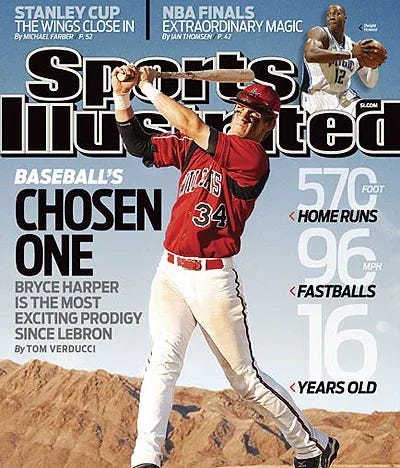
Shohei Ohtani. Bryce Harper. Paul Skenes. These are all players we were hearing about long before they had an MLB team.
The players who generate national media attention before they’re drafted tend to carry that energy into the hobby for years. That pre-draft buzz is a signal worth tracking. If ESPN is running a feature on a high school kid, that’s usually a good sign.
Rule #2
Age is everything.
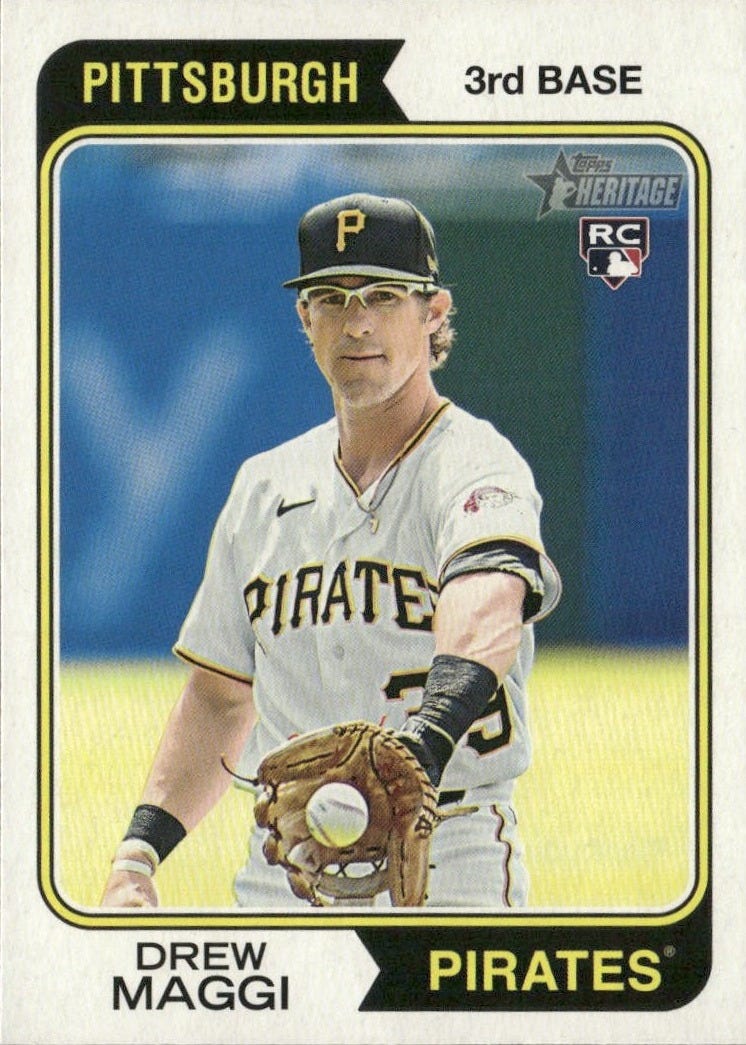
When buying singles, we stick to players who are 22 or under.
It might sound arbitrary, but it isn’t. Younger players have the runway to chase the milestones the hobby values most. 3,000 hits, 500 home runs, the kind of numbers that define careers and drive long-term card markets.
A player who doesn’t reach the majors until 25 or 26 isn’t disqualified, but their ceiling for all-time greatness is much narrower.
Rule #3
Size matters… to a point.
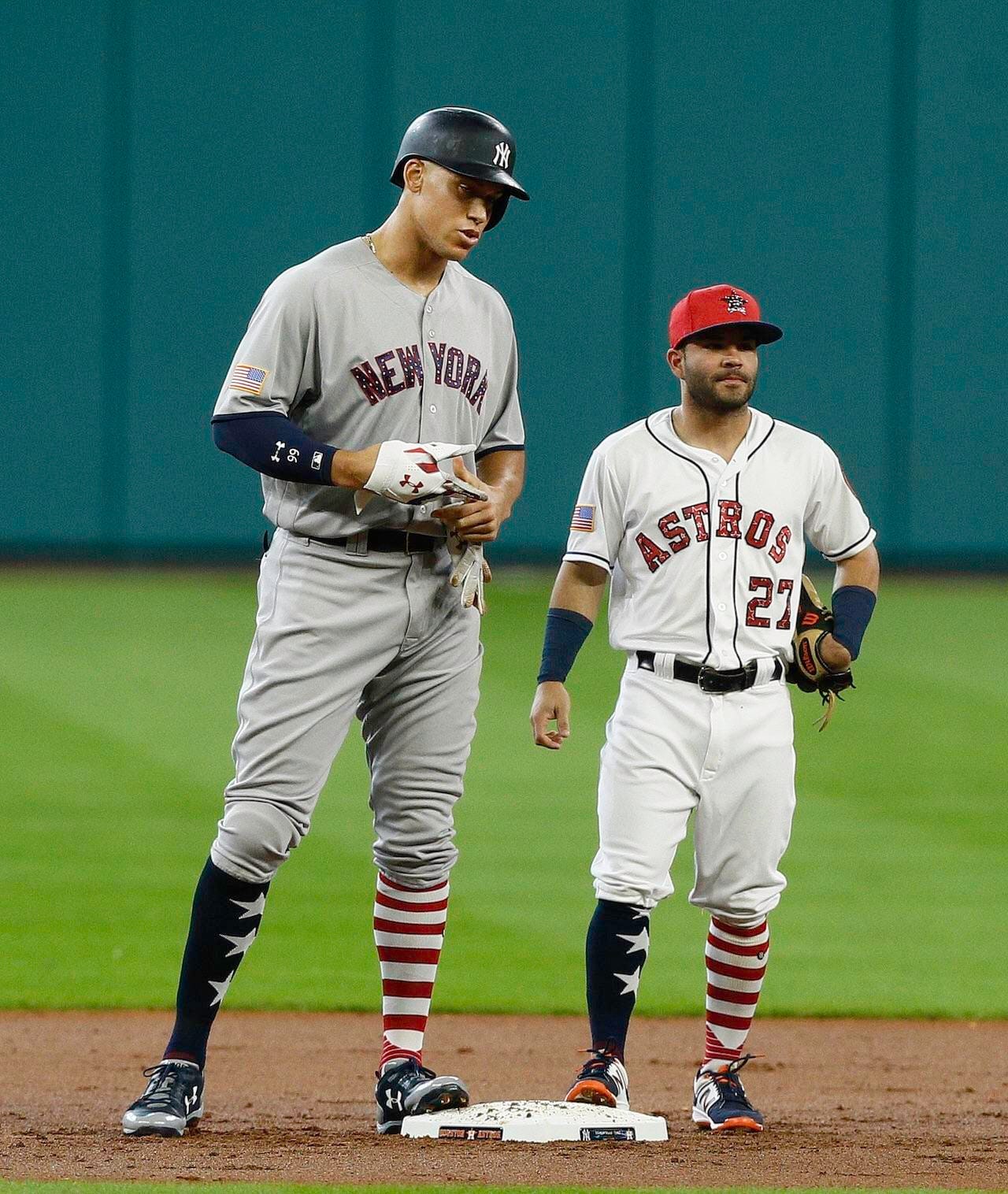
Taller players can typically throw harder and hit with more power due to the leverage their larger frames create. But “can” and “do” are two very different things. Size is not a guarantee.
If we’re choosing between two prospects, we’ll lean taller more often than not.
Rule #4
Stick with 1st Bowmans, autos, and numbered parallels.
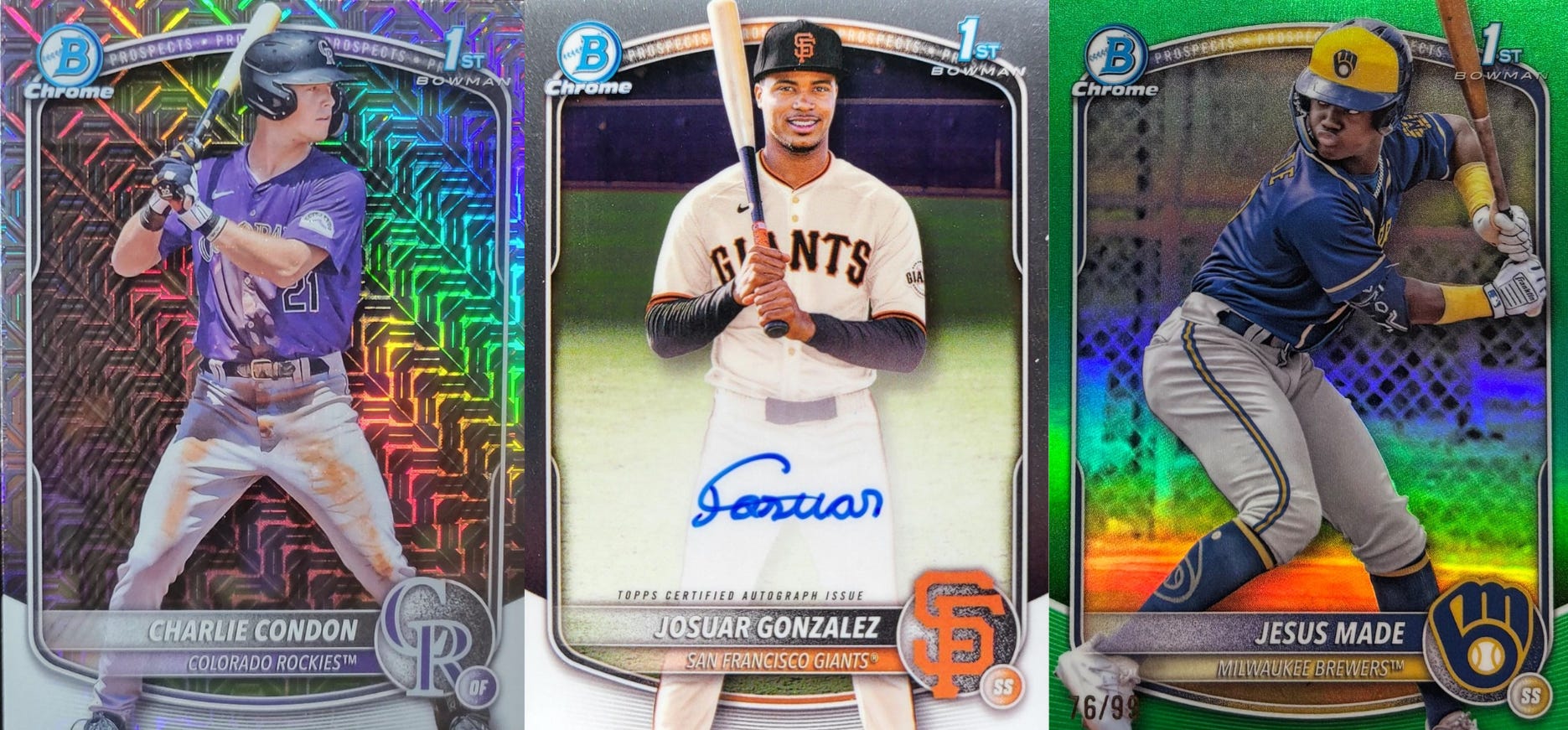
Concentrate your dollars on cards that carry most of the hobby value. Generally speaking, these are 1st Bowman cards, autographs, and numbered parallels. That’s where the hobby pays attention, so that’s where the upside lives.
A base chrome parallel of a player who’s been grinding through Double-A for three years isn’t going to move much.
Rule #5
The hobby gives position players more runway.
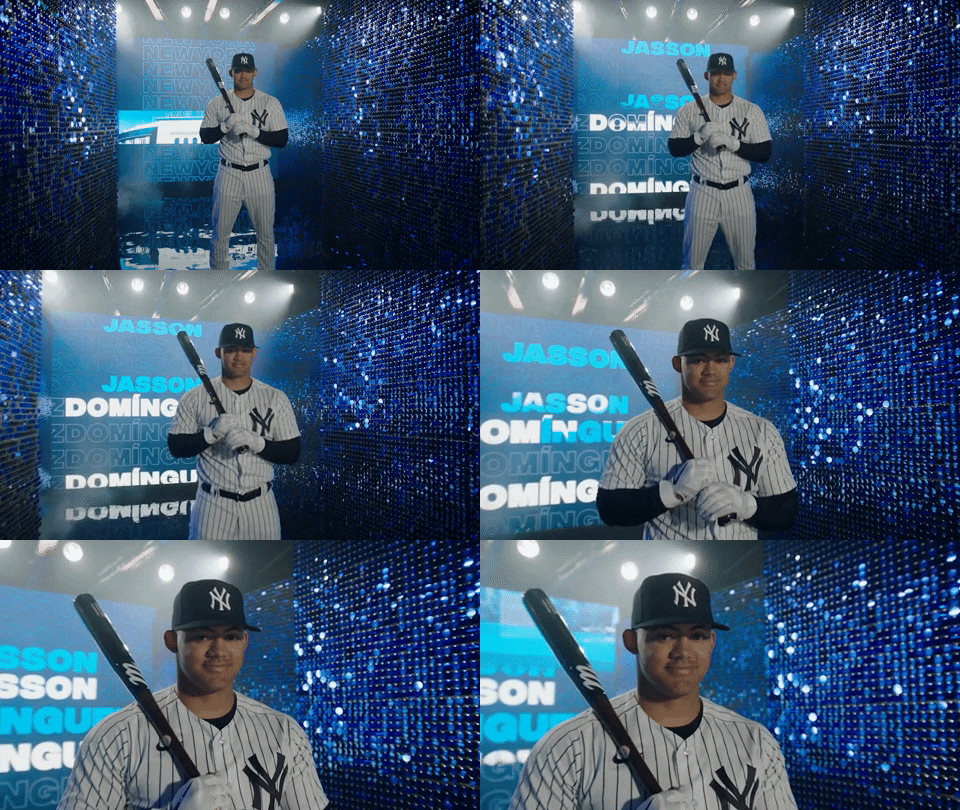
Pitchers can flame out faster. The durability concerns are real, the injury risk is higher, and the hobby adjusts quickly when a pitcher’s stuff regresses or the UCL gives out. Position players tend to get more benefit of the doubt and more time to figure it out.
Look at how long it took the hobby to fully write off Jasson Dominguez. Despite the setbacks, collectors held. That patience is far more common with position players.
Rule #5a
Draft slot buys patience, too.
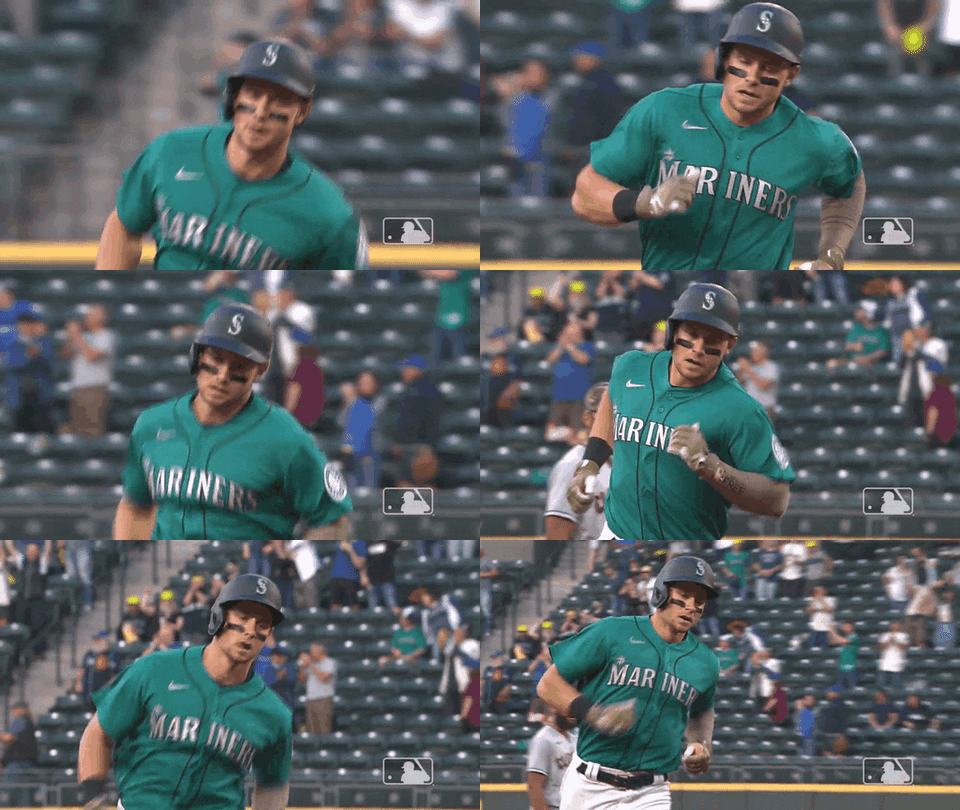
A first-round pick who struggles in year one is still a first-round pick. The organization believes in him, the hobby believes in him, and collectors give him time.
Grayson Rodriguez is a perfect example. He was an early first-rounder with big stuff and an uneven path to the majors, but the hobby never fully bailed because the draft pedigree kept optimism alive. A sixth-round flier who stumbles doesn’t get that same grace.
The Timing Window
Here’s where a lot of collectors leave money on the table.
Hype peaks around a product’s release date. A hot prospect gets attention, prices spike, and almost on cue, the next product drops and the hobby moves on. That cycle happens every single year.
Our advice: target singles from the last three releases—but not the most recent one. When 2026 Bowman hits shelves this spring, the conversation will shift almost immediately to Ethan Holliday. That’s when prospects from 2025 Bowman Draft, ’25 Bowman Chrome, and ’25 Bowman start to cool. Players who were getting attention six months ago are still the same players, but the market’s already looking ahead.
That’s your entry point.
Remember last fall when everyone was chasing A’s two-way sensation, Shotaro Morii? Check out his market now that there are almost two more major Bowman releases behind us.
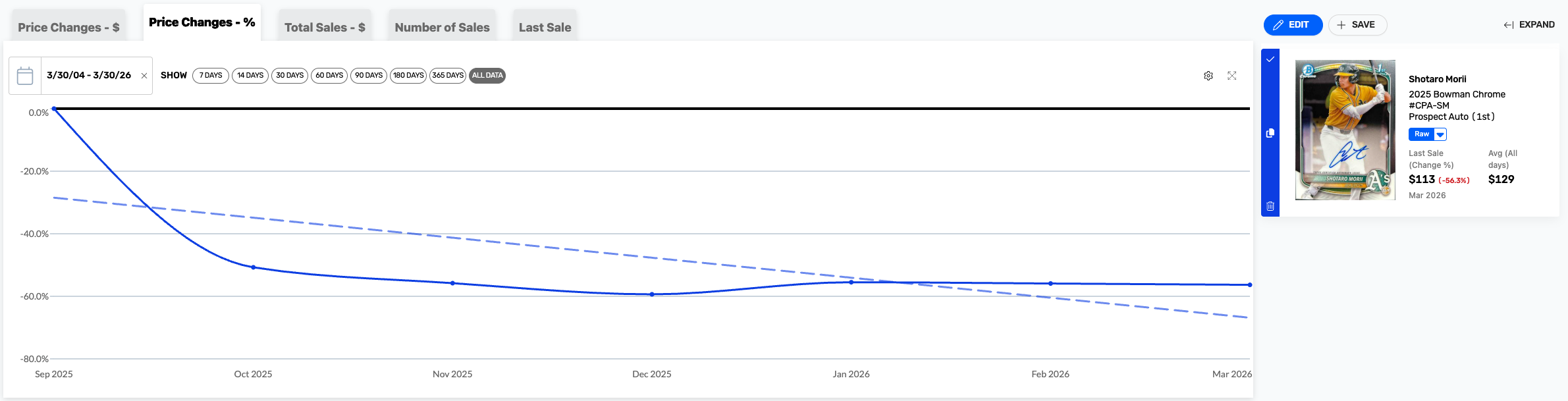
Don’t worry about being the first to pick up on a prospect. All you have to do is get his cards before they start talking about calling him up.
The Bottom Line
Baseball prospecting rewards patience and punishes urgency. The collectors who do it well aren’t chasing the next spike. They’re identifying windows before the market catches up.
Find the right products. Target the right timeline. Know what you’re buying and why.
The prospect pool right now is deep enough that real opportunities are sitting at discounted prices. You just have to know where to look.
Got a prospect we should cover? Or a question of your own? Drop it in the comments or shoot us a message. We read every one, and sometimes, like this time, it turns into an article.
Disclaimer: The content in The Hobby Wire is for informational and entertainment purposes only. Commentary, analysis, and opinions on sports cards, rookies, and the hobby are not financial, investment, or professional advice. Collectors should always do their own research before buying, selling, or trading cards. Market values are volatile and can change rapidly—past performance is not a guarantee of future results.
Unless specified, all pricing references are based on the Prizm/Refractor parallels of an athlete's Chrome rookie card, with prices from Market Movers, alt.xyz & 130pt.com.
Any odds mentioned were derived from DraftKings Sportsbook.