

For athletes, winning is everything.
It’s what separates champions from stars, dynasties from “what-ifs.”
But in the hobby — where cardboard is both currency and storytelling — does winning actually change what collectors are willing to pay?
To find out, we looked across the three major sports: Basketball, Football, and Baseball. We paired off players from the same era with nearly identical stats and accolades — but very different outcomes when it came to championship rings.
To keep things fair, we stayed away from hobby darlings like Trout, LeBron, and Brady — players whose markets are driven as much by celebrity as by performance. Instead, we focused on names that invite debate, not bias.
Each player is represented by a PSA 10 Topps Chrome Refractor — a consistent, recognizable card that reflects real market sentiment. From there, we followed the numbers to see what truly matters more to collectors: winning titles or proving greatness.
Basketball: Melo vs. D-Wade
In 2003, two of the greatest players of their generation entered the NBA side by side.

Carmelo Anthony — the effortless scorer from Syracuse, a walking bucket with a silky midrange game.
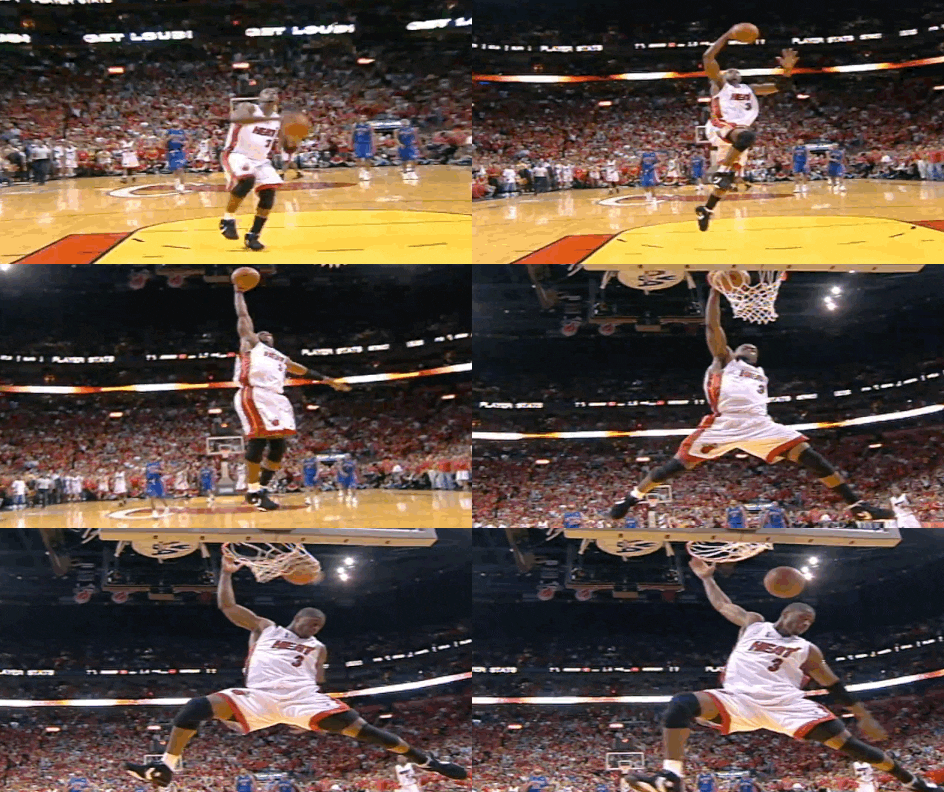
And Dwyane Wade — the fearless slasher from Marquette whose combination of power and finesse made him one of the most dynamic guards the game had ever seen.
Their careers mirror each other in striking ways:
Carmelo Anthony
22.5 points per game
6.2 rebounds per game
2.7 assists per game
10x All-Star
6x All-NBA
0 Championships
Dwyane Wade
22.0 points per game
4.7 rebounds per game
5.4 assists per game
13x All-Star
8x All-NBA
3x NBA Champion
Both will stroll into the Hall of Fame and both were leaders on Team USA’s golden 2008 “Redeem Team.” But where Melo’s story is one of scoring brilliance, there isn’t much team success to put a bow on it. Wade’s legacy, on the other hand, is cemented in parades and confetti — three rings and a Finals MVP gets him a spot on the short list of all-time great shooting guards.
As a result, Melo’s 2003 Topps Chrome Refractor sells for around $462.40 while D-Wade’s goes for closer to $1,359.20.
The hobby rewards the winner. Wade’s card sells for roughly three times Anthony’s, despite comparable career production. In basketball, it looks like rings define narrative, and narrative drives price.
Football: Philip Rivers vs. Ben Roethlisberger
No pair defines the “what if” of winning like these two from the 2004 quarterback class.
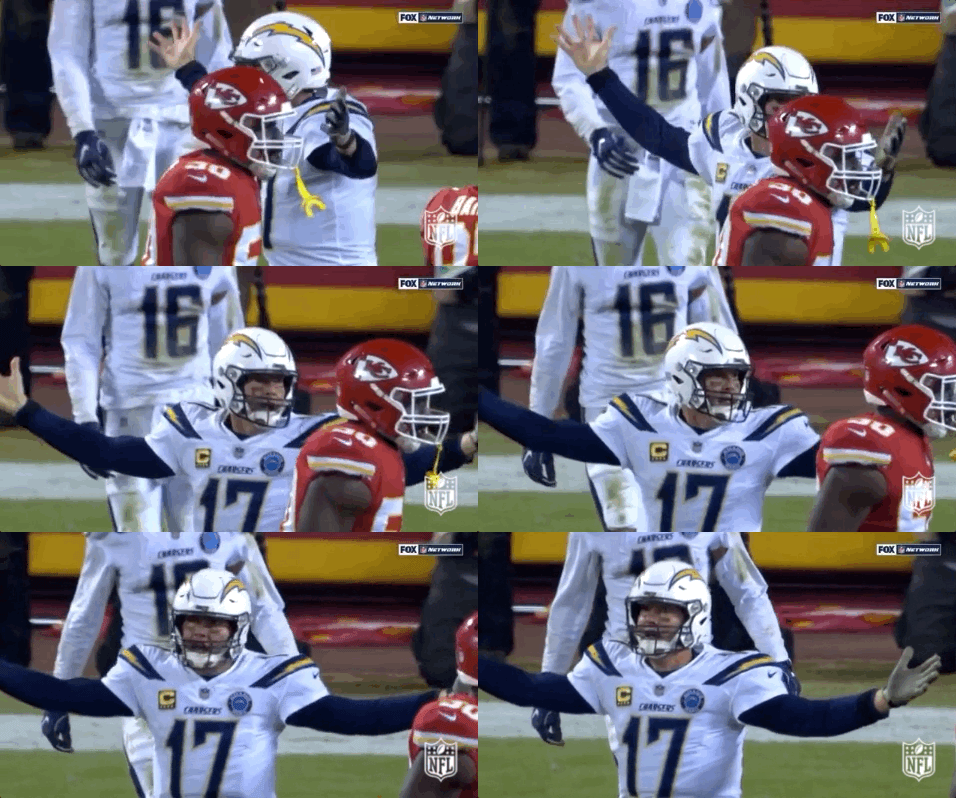
Philip Rivers was the consummate competitor — tough, consistent, and reliable. He threw for over 63,000 yards and 400 touchdowns, rarely missed a game, and made the Chargers relevant for nearly two decades.
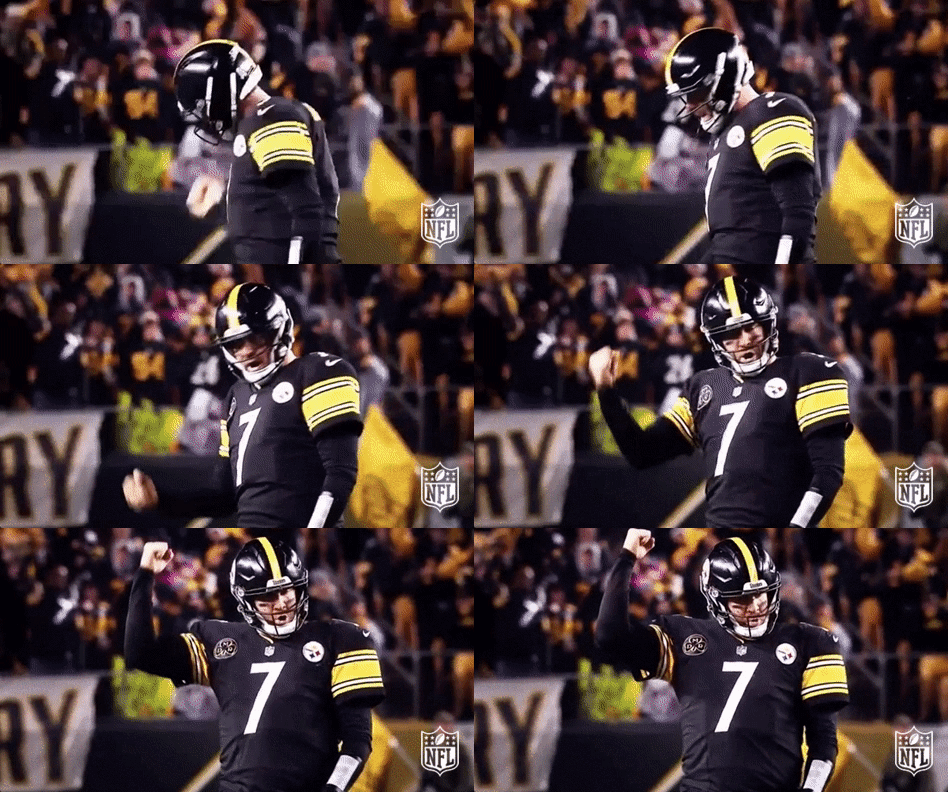
Roethlisberger’s career numbers look almost identical. But his résumé carries one line Rivers could never add: “2x Super Bowl Champion.”
He wasn’t always the flashiest quarterback, but when it mattered — in January — he delivered.
Philip Rivers
63,440 passing yards
421 touchdowns
95.2 career passer rating
8x Pro Bowl
0 Super Bowls
Ben Roethlisberger
64,088 passing yards
418 touchdowns
93.5 career passer rating
6x Pro Bowl
2x Super Bowl Champion
Philip Rivers ‘04 Chrome Refractor sells for about $407.80. Big Ben…$3,251.20!
The Roethlisberger Refractor commands nearly eight times the price of Rivers’. In football, championships don’t just enhance legacy — they define it. Collectors follow the same logic fans do: quarterback rings are the final measure of greatness.
Baseball: Nolan Arenado vs. Alex Bregman
Our final matchup brings us to baseball — and a more complicated story.
Nolan Arenado and Alex Bregman both represent the modern third baseman at its peak.
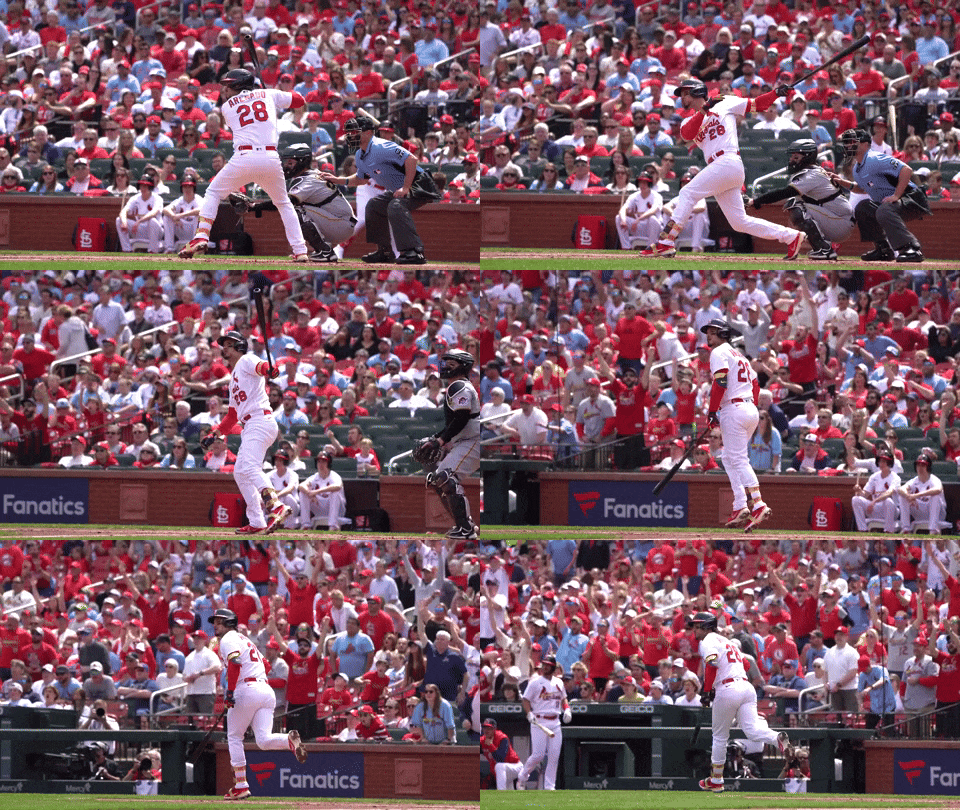
Arenado is the gold standard defensively — a human highlight reel at the hot corner with the bat to match.
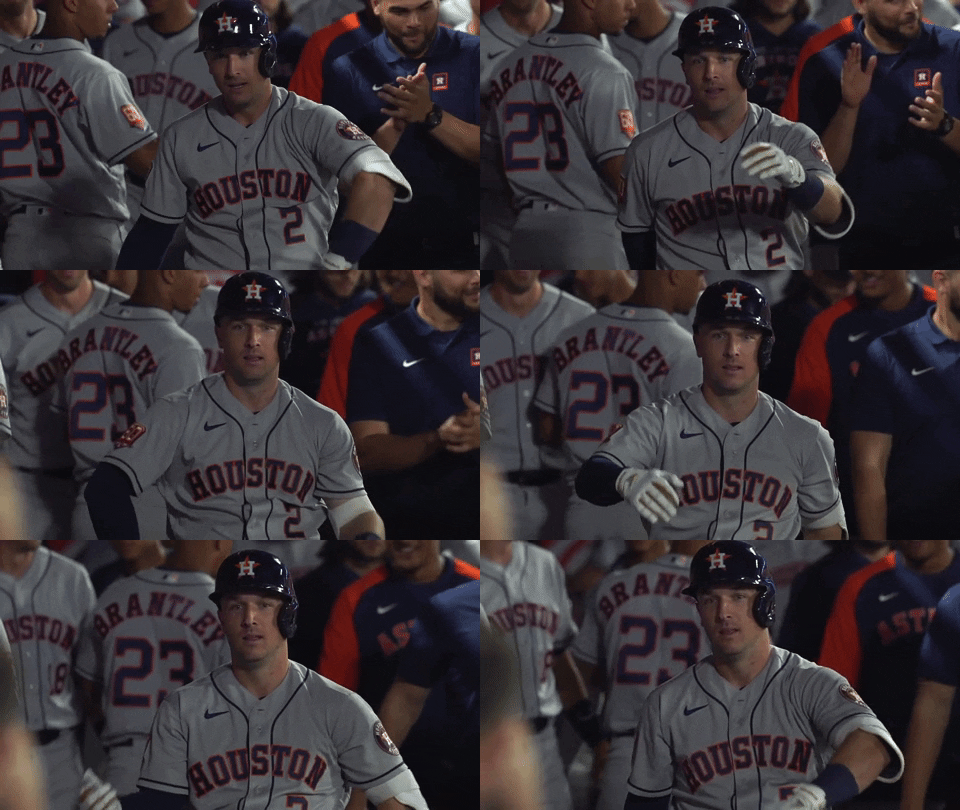
Bregman, meanwhile, was a central piece of Houston’s dynasty: patient at the plate, surgical in big moments, and a consistent postseason performer.
Nolan Arenado
.282 batting average
.338 on-base percentage
.507 slugging percentage
353 home runs
1,184 RBI
57.8 career WAR
10× Gold Glove
6× Platinum Glove
5× Silver Slugger
0 Championships
Alex Bregman
.273 batting average
.365 on-base percentage
.481 slugging percentage
209 home runs
725 RBI
43.1 career WAR
1× Gold Glove
1× Silver Slugger
2× World Series Champion
By the logic of our other sports, Bregman should have the higher-priced card. He’s a two-time champion and postseason regular, while Arenado has yet to make it beyond the division series.
But in baseball, the equation shifts.
Nolan Arenado’s 2013 Topps Chrome Refractor sells for around $112.40 while Alex Bregman’s 2017 Chrome Refractor only sells for $36.80.
Arenado’s card sells for roughly three times Bregman’s — the reverse of what we saw in football and basketball. It seems that baseball collectors tend to reward individual consistency, defense, and career value over team success.
And perhaps that’s no surprise. Winning the World Series might be the hardest championship in American team sports.
Teams play 162 games before even reaching the postseason, then face a gauntlet of a playoff structure. There hasn’t been a back to back champion in MLB in over two decades. Rings are rare, elusive, and often out of an individual player’s control.
So, the hobby adjusts. Baseball values performance over circumstance. MVPs over banners. Consistency over October luck.
What do you think?
Across three sports, three sets of stats, and three markets, one truth stands out: collectors value what their sport values. Football worships winners. Basketball celebrates legacy. Baseball prizes individual consistency.
So, what do you think?
Should winning matter more in the hobby — or have collectors gotten it right by focusing on individual excellence?
Drop your thoughts in the comments below and tell us which side of the “stats vs. rings” debate you’re on.
Maybe we’ll feature the best takes in an upcoming follow-up.
Disclaimer: The content in The Hobby Wire is for informational and entertainment purposes only. Commentary, analysis, and opinions on sports cards, rookies, and the hobby are not financial, investment, or professional advice. Collectors should always do their own research before buying, selling, or trading cards. Market values are volatile and can change rapidly—past performance is not a guarantee of future results.
Unless specified, all pricing references are based on the Prizm/Refractor parallels of an athlete’s Chrome rookie card, with prices from alt.xyz & 130pt.com.
Any odds mentioned were derived from DraftKings Sportsbook.