

If you’re just getting into collecting, one of the first questions you’ll run into is: Where do I actually buy boxes of cards? Collectors sometimes call sealed product “wax,” and depending on where you shop, your experience (and your wallet) can look very different. Here’s a quick breakdown of the main places to buy wax, what they are, and the pros and cons of each.
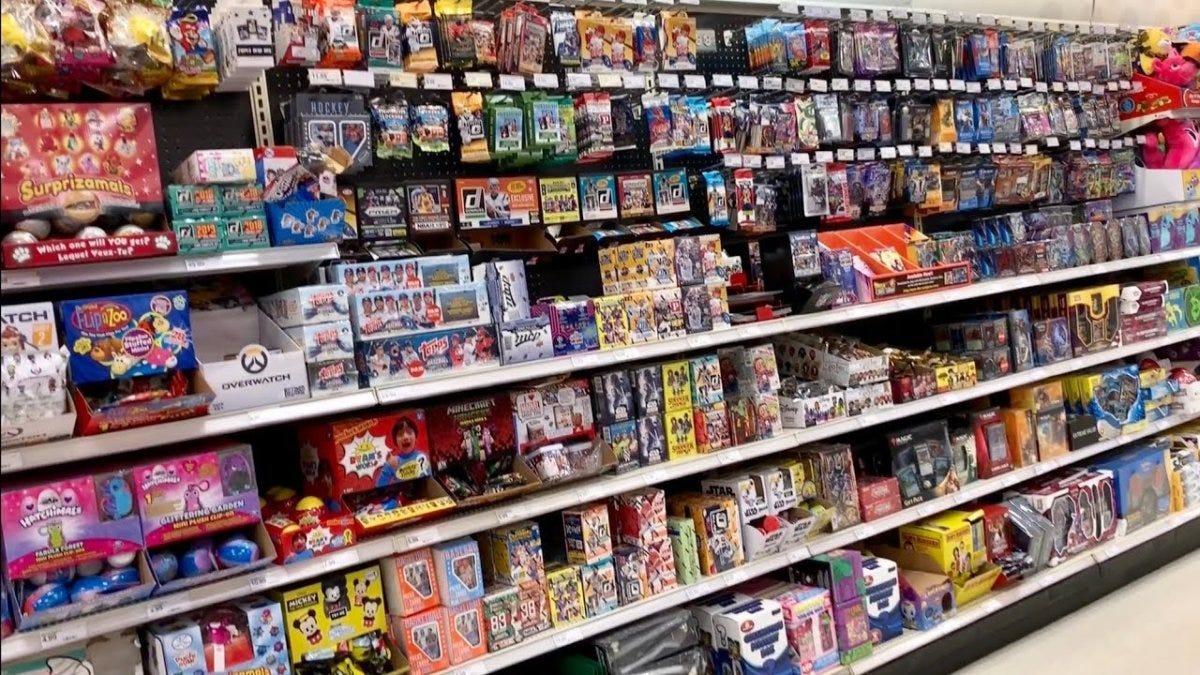
Retail Stores (Target, Walmart, etc.)
Big-box retailers are often the most straightforward way to find sealed product. These stores typically carry retail formats only, such as blasters, hangers, and fat packs, all sold at MSRP.
Pros:
Prices never increase — boxes always sell at MSRP.
Most accessible entry point for beginners.
Cons:
Retail formats only (no hobby boxes).
Stock can be inconsistent and often sells out fast.
Prices rarely go down.
Brick-and-Mortar Hobby Shops & Trade Shows
Local card shops (LCSs) and trade shows are the traditional hubs of the hobby. Beyond wax, they often stock singles, supplies, and graded cards—making them a one-stop shop for collectors. More importantly, they’re gathering places where you can meet other hobbyists, swap stories, and learn the ropes.
Pros
Built-in community: a chance to connect with other collectors.
Access to both hobby and retail formats in one place.
Most shops also offer singles, supplies, and graded inventory.
Cons
Prices are often marked up. Small businesses need margin to survive, but sometimes it can be egregious—we’ve seen blaster boxes at $40 when the same product is $25 at Target.
Inventory depends on allocation, so stock can be inconsistent.
Online Hobby Shops (Dave & Adam’s, Steel City, Blowout)
These large online retailers specialize in sports cards and memorabilia. Think of them as the digital equivalent of a giant hobby shop. They carry massive inventories, from brand-new releases to decades-old products, and compete hard on pricing.
Pros:
Massive inventory, with both new releases and boxes from decades ago.
Ability to pre-order wax before release day.
Competitive pricing — the “big three” often undercut each other.
Cons:
Prices fluctuate daily based on demand.
Shipping usually takes 2–3 days.
Tip: Create free accounts for Dave & Adams, Steel City Collectibles, and Blowout Cards and compare prices before pulling the trigger. You can save upwards of $20–30 just by shopping smart.
Direct from the Manufacturer (Topps/Fanatics, Panini)
Buying direct is the cleanest way to lock in MSRP for new releases. Both hobby and retail formats are sold, with early pre-orders and rewards programs for frequent buyers.
Pros:
Guaranteed MSRP pricing at release.
Access to both retail and hobby products.
Loyalty/reward programs for frequent buyers.
Pre-orders often go live before anywhere else, with boxes arriving on release day.
Cons:
Inventory is limited — popular products often sell out in hours.
Only the latest products are available (no back catalog).
Online Marketplaces (eBay, COMC, CollX, Alt, Goldin)
Online secondary marketplaces/auction houses are where individual sellers can list wax and singles from their own personal collections. LCSs and other businesses can also use these platforms to get more eyes on their inventory. Marketplaces give you access to everything—from sealed wax to singles—but with higher risk and variable pricing.
Pros:
Wide variety, including older products you won’t find elsewhere.
Opportunity to find deals from smaller sellers.
Auction format can sometimes land you under-market prices.
Cons:
Buyer beware: risk of resealed boxes if the seller isn’t reputable.
Prices often inflated compared to retail.
Shipping times vary widely.
Group Breaks (Breaker Pages, Fanatics Live YouTube/Instagram, Whatnot)
Group breaking is a more modern format where breakers open boxes live (usually on YouTube or Twitch) and sell team or player “slots” to collectors. It’s generally advertised as a way to get in on opening boxes or entire cases that might be too expensive for you to buy outright.
Pros:
An affordable way to chase high-end product without buying a whole box.
Community-driven — live chat, shared excitement, and a social element.
Access to products that might otherwise be out of reach.
Cons:
In reality, its a pure gamble — you might walk away with nothing depending on what you’ve bought into.
Breaker reputation matters. You have to choose wisely to avoid shady operators.
No guarantee on value; it’s entertainment as much as collecting.
Final Thoughts
For new collectors, the best move is to keep it simple:
Retail stores are your go-to for affordable retail boxes at MSRP—buy them here while you can.
If there’s a specific new hobby product you know you want, pre-order it direct from the manufacturer to lock in pricing before it sells out.
For most released hobby-format boxes, the smartest play is to order from online hobby shops—you’ll get the widest selection and the most competitive prices if you can resist the FOMO and wait for shipping.
Unless you’re shopping for singles, steer clear of online marketplaces and group breaks if your goal is a fun, risk-free way to collect.
Start with sticking to these principles, and you’ll avoid the worst pitfalls while giving yourself the best shot at enjoying the hobby.
Disclaimer: The content in The Hobby Wire is for informational and entertainment purposes only. Commentary, analysis, and opinions on sports cards, rookies, and the hobby are not financial, investment, or professional advice. Collectors should always do their own research before buying, selling, or trading cards. Market values are volatile and can change rapidly—past performance is not a guarantee of future results.
Unless specified, all pricing references are based on the Prizm/Refractor parallels of an athlete's Chrome rookie card, with prices from alt.xyz & 130pt.com.
Any odds mentioned were derived from DraftKings Sportsbook.